Get your patient on Phentermine Hydrochloride
Phentermine Hydrochloride prescribing information

INDICATIONS & USAGE
Phentermine hydrochloride tablets, USP is indicated as a short-term (a few weeks) adjunct in a regimen of weight reduction based on exercise, behavioral modification and caloric restriction in the management of exogenous obesity for patients with an initial body mass index ≥30 kg/m 2 , or ≥27 kg/m 2 in the presence of other risk factors (e.g., controlled hypertension, diabetes, hyperlipidemia).
Below is a chart of body mass index (BMI) based on various heights and weights. BMI is calculated by taking the patients weight, in kilograms (kg), divided by the patients height, in meters (m), squared. Metric conversions are as follows: pounds ÷ 2.2 = kg; inches x 0.0254 = meters. 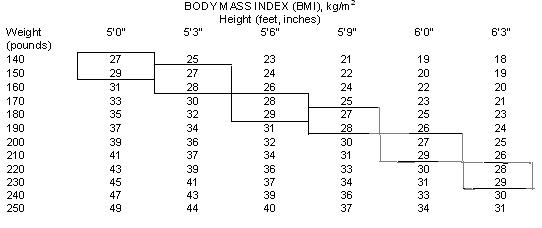
The limited usefulness of agents of this class, including Phentermine hydrochloride tablets, USP [see Clinical Pharmacology (12.1, 12.2)] should be measured against possible risk factors inherent in their use such as those described below.
DOSAGE & ADMINISTRATION
• Dosage should be individualized to obtain an adequate response with the lowest effective dose. (2.1 ) • Late evening administration should be avoided (risk of insomnia). (2.1 ) • Phentermine hydrochloride tablets, USP can be taken with or without food. (2.1 ) • Limit the dosage to 15 mg daily for patients with severe renal impairment (eGFR 15 to 29 mL/min/1.73 m 2 ). (2.2 )
Exogenous Obesity
Dosage should be individualized to obtain an adequate response with the lowest effective dose.
The usual adult dose is one tablet (37.5 mg) daily, as prescribed by the physician, administered before breakfast or 1-2 hours after breakfast. The dosage may be adjusted to the patient’s need. For some patients half tablet (18.75 mg) daily may be adequate, while in some cases it may be desirable to give half tablet (18.75 mg) two times a day.
Phentermine hydrochloride tablets, USP is not recommended for use in pediatric patient’s ≤16 years of age.
Late evening medication should be avoided because of the possibility of resulting insomnia.
Dosage in Patients with Renal Impairment
The recommended maximum dosage of Phentermine hydrochloride tablets, USP is 15 mg daily for patients with severe renal impairment (eGFR 15 to 29 mL/min/1.73 m 2 ). Avoid use of Phentermine hydrochloride tablets, USP in patients with eGFR less than 15 mL/min/1.73 m 2 or end-stage renal disease requiring dialysis [See Use in Specific Populations (8.6 ) and Clinical Pharmacology (12.3) ].
DOSAGE FORMS & STRENGTHS
Tablets containing 37.5 mg phentermine hydrochloride. (3)
USE IN SPECIFIC POPULATIONS
- Nursing mothers: Discontinue drug or nursing taking into consideration importance of drug to mother. (4 , 8.3 )
- Pediatric use: Safety and effectiveness not established. (8.4 )
- Geriatric use: Due to substantial renal excretion, use with caution. (8.5 )
- Renal Impairment: Avoid use in patients with eGFR less than 15 mL/min/m 2 or end-stage renal disease requiring dialysis. (8.6 )
Pregnancy
Teratogenic Effects Pregnancy category X
Phentermine hydrochloride tablets, USP is contraindicated during pregnancy because weight loss offers no potential benefit to a pregnant woman and may result in fetal harm. A minimum weight gain, and no weight loss, is currently recommended for all pregnant women, including those who are already overweight or obese, due to obligatory weight gain that occurs in maternal tissues during pregnancy. Phentermine has pharmacologic activity similar to amphetamine (d- and d l l-amphetamine) [see Clinical Pharmacology (12.1) ]. Animal reproduction studies have not been conducted with phentermine. If this drug is used during pregnancy, or if the patient becomes pregnant while taking this drug, the patient should be apprised of the potential hazard to a fetus.
Nursing Mothers
It is not known if Phentermine hydrochloride tablets, USP is excreted in human milk; however, other amphetamines are present in human milk. Because of the potential for serious adverse reactions in nursing infants, a decision should be made whether to discontinue nursing or to discontinue the drug, taking into account the importance of the drug to the mother.
Pediatric Use
Safety and effectiveness in pediatric patients have not been established. Because pediatric obesity is a chronic condition requiring long-term treatment, the use of this product, approved for short-term therapy, is not recommended.
Geriatric Use
In general, dose selection for an elderly patient should be cautious, usually starting at the low end of the dosing range, reflecting the greater frequency of decreased hepatic, renal, or cardiac function, and of concomitant disease or other drug therapy.
This drug is known to be substantially excreted by the kidney, and the risk of toxic reactions to this drug may be greater in patients with impaired renal function. Because elderly patients are more likely to have decreased renal function, care should be taken in dose selection, and it may be useful to monitor renal function.
Renal Impairment
Based on the reported excretion of phentermine in urine, exposure increases can be expected in patients with renal impairment. [see Clinical Pharmacology (12.3) ]. Use caution when administering Phentermine hydrochloride tablets, USP to patients with renal impairment. In patients with severe renal impairment (eGFR 15 to 29 mL/min/1.73m 2 ), limit the dosage of Phentermine hydrochloride tablets, USP to 15 mg daily [See Dosage and Administration (2.2) ]. Phentermine hydrochloride tablets, USP has not been studied in patients with eGFR less than 15 mL/min/1.73m 2 , including end-stage renal disease requiring dialysis; avoid use in these populations.
CONTRAINDICATIONS
- History of cardiovascular disease (e.g. coronary artery disease, stroke, arrhythmias, congestive heart failure, uncontrolled hypertension)
- During or within 14 days following the administration of monoamine oxidase inhibitors
- Hyperthyroidism
- Glaucoma
- Agitated states
- History of drug abuse
- Pregnancy [see Use in Specific Populations (8.1 )]
- Nursing [see Use in Specific Populations (8.3 )]
- Known hypersensitivity, or idiosyncrasy to the sympathomimetic amines
WARNINGS AND PRECAUTIONS
- Coadministration with other drugs for weight loss is not recommended (safety and efficacy of combination not established). (5.1 )
- Rare cases of primary pulmonary hypertension have been reported. Phentermine hydrochloride tablets, USP should be discontinued in case of new, unexplained symptoms of dyspnea, angina pectoris, syncope or lower extremity edema. (5.2 )
- Rare cases of serious regurgitant cardiac valvular disease have been reported. (5.3 )
- Tolerance to the anorectic effect usually develops within a few weeks. If this occurs, Phentermine hydrochloride tablets, USP should be discontinued. The recommended dose should not be exceeded. (5.4 )
- Phentermine hydrochloride tablets, USP may impair the ability of the patient to engage in potentially hazardous activities such as operating machinery or driving a motor vehicle. (5.5 )
- Risk of abuse and dependence. The least amount feasible should be prescribed or dispensed at one time in order to minimize the possibility of overdosage. (5.6 ).
- Concomitant alcohol use may result in an adverse drug reaction. (5.7 ).
- Use caution in patients with even mild hypertension (risk of increase in blood pressure). (5.8 )
- A reduction in dose of insulin or oral hypoglycemic medication may be required in some patients. (5.9 )
Coadministration With Other Drug Products for Weight Loss
Phentermine hydrochloride tablets, USP is indicated only as short-term (a few weeks) monotherapy for the management of exogenous obesity. The safety and efficacy of combination therapy with Phentermine hydrochloride tablets, USP and any other drug products for weight loss, including prescribed drugs, over-the-counter preparations, and herbal products, or serotonergic agents such as selective serotonin reuptake inhibitors (e.g., fluoxetine, sertraline, fluvoxamine, paroxetine), have not been established. Therefore, coadministration of Phentermine hydrochloride tablets, USP and these drug products is not recommended.
Primary Pulmonary Hypertension
Primary Pulmonary Hypertension (PPH) – a rare, frequently fatal disease of the lungs – has been reported to occur in patients receiving a combination of phentermine with fenfluramine or dexfenfluramine. The possibility of an association between PPH and the use of Phentermine hydrochloride tablets, USP alone cannot be ruled out; there have been rare cases of PPH in patients who reportedly have taken phentermine alone. The initial symptom of PPH is usually dyspnea. Other initial symptoms may include angina pectoris, syncope or lower extremity edema. Patients should be advised to report immediately any deterioration in exercise tolerance. Treatment should be discontinued in patients who develop new, unexplained symptoms of dyspnea, angina pectoris, syncope or lower extremity edema, and patients should be evaluated for the possible presence of pulmonary hypertension.
Valvular Heart Disease
Serious regurgitant cardiac valvular disease, primarily affecting the mitral, aortic and/or tricuspid valves, has been reported in otherwise healthy persons who had taken a combination of phentermine with fenfluramine or dexfenfluramine for weight loss. The possible role of phentermine in the etiology of these valvulopathies has not been established and their course in individuals after the drugs are stopped is not known. The possibility of an association between valvular heart disease and the use of Phentermine hydrochloride tablets, USP alone cannot be ruled out; there have been rare cases of valvular heart disease in patients who reportedly have taken phentermine alone.
Development of Tolerance, Discontinuation in Case of Tolerance
When tolerance to the anorectant effect develops, the recommended dose should not be exceeded in an attempt to increase the effect; rather, the drug should be discontinued.
Effect on the Ability to Engage in Potentially Hazardous Tasks
Phentermine hydrochloride tablets, USP may impair the ability of the patient to engage in potentially hazardous activities such as operating machinery or driving a motor vehicle; the patient should therefore be cautioned accordingly.
Risk of Abuse and Dependence
Phentermine hydrochloride tablets, USP is related chemically and pharmacologically to amphetamine (d-and d/l-amphetamine) and other related stimulant drugs that have been extensively abused. The possibility of abuse of Phentermine hydrochloride tablets, USP should be kept in mind when evaluating the desirability of including a drug as part of a weight reduction program. See Drug Abuse and Dependence (9) and Overdosage (10) .
The least amount feasible should be prescribed or dispensed at one time in order to minimize the possibility of overdosage.
Usage With Alcohol
Concomitant use of alcohol with Phentermine hydrochloride tablets, USP may result in an adverse drug reaction.
Use in Patients with Hypertension
Use caution in prescribing Phentermine hydrochloride tablets, USP for patients with even mild hypertension (risk of increase in blood pressure).
Use in Patients on Insulin or Oral Hypoglycemic Medications for Diabetes Mellitus
A reduction in insulin or oral hypoglycemic medications in patients with diabetes mellitus may be required.
ADVERSE REACTIONS
The following adverse reactions are described, or described in greater detail, in other sections:
- Primary pulmonary hypertension [see Warnings and Precautions (5.2) ]
- Valvular heart disease [see Warnings and Precautions (5.3) ]
- Effect on the ability to engage in potentially hazardous tasks [see Warnings and Precautions (5.5) ]
- Withdrawal effects following prolonged high dosage administration [see Drug Abuse and Dependence (9.3) ]
The following adverse reactions to phentermine have been identified:
Cardiovascular
Primary pulmonary hypertension and/or regurgitant cardiac valvular disease, palpitation, tachycardia, elevation of blood pressure, ischemic events.
Central Nervous System
Overstimulation, restlessness, dizziness, insomnia, euphoria, dysphoria, tremor, headache, psychosis.
Gastrointestinal
Dryness of the mouth, unpleasant taste, diarrhea, constipation, other gastrointestinal disturbances.
Allergic
Urticaria.
Endocrine
Impotence, changes in libido.
DRUG INTERACTIONS
- Monoamine oxidase inhibitors: Risk of hypertensive crisis. (4 , 7.1 )
- Alcohol: Consider potential interaction (7.2 )
- Insulin and oral hypoglycemics: Requirements may be altered. (7.3 )
- Adrenergic neuron blocking drugs: Hypotensive effect may be decreased by Phentermine hydrochloride tablets, USP. (7.4 )
Monoamine Oxidase Inhibitors
Use of Phentermine hydrochloride tablets, USP is contraindicated during or within 14 days following the administration of monoamine oxidase inhibitors because of the risk of hypertensive crisis.
Alcohol
Concomitant use of alcohol with Phentermine hydrochloride tablets, USP may result in an adverse drug reaction.
Insulin and Oral Hypoglycemic Medications
Requirements may be altered [see Warnings and Precautions (5.9) ].
Adrenergic Neuron Blocking Drugs
Phentermine hydrochloride tablets, USP may decrease the hypotensive effect of adrenergic neuron blocking drugs.
DESCRIPTION
Phentermine hydrochloride USP is a sympathomimetic amine anorectic. It has the chemical name of α,α-Dimethylphenethylamine hydrochloride. The structural formula is as follows: 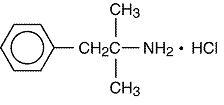
C 10 H 15 N • HCl
M.W. 185.7
Phentermine hydrochloride is a white, odorless, hygroscopic, crystalline powder which is soluble in water and lower alcohols, slightly soluble in chloroform and insoluble in ether.
Phentermine hydrochloride tablets, USP, an anorectic agent for oral administration, is available as a tablet containing 37.5 mg of phentermine hydrochloride (equivalent to 30 mg of phentermine base).
Phentermine hydrochloride tablets, USP contain the inactive ingredients, Magnesium Stearate, Microcrystalline Cellulose, Pregelatinized Starch (botanical source: maize), Sugar Spheres (consisting of Sucrose, Corn starch, FD&C Blue#1).
CLINICAL PHARMACOLOGY
Mechanism of Action
Phentermine hydrochloride tablets, USP is a sympathomimetic amine with pharmacologic activity similar to the prototype drugs of this class used in obesity, amphetamine (d- and d l l-amphetamine). Drugs of this class used in obesity are commonly known as “anorectics” or “anorexigenics.” It has not been established that the primary action of such drugs in treating obesity is one of appetite suppression since other central nervous system actions, or metabolic effects, may also be involved.
Pharmacodynamics
Typical actions of amphetamines include central nervous system stimulation and elevation of blood pressure. Tachyphylaxis and tolerance have been demonstrated with all drugs of this class in which these phenomena have been looked for .
Pharmacokinetics
Following the administration of phentermine, phentermine reaches peak concentrations (C max ) after 3 to 4.4 hours.
Specific Populations
Renal Impairment
Cumulative urinary excretion of phentermine under uncontrolled urinary pH conditions was 62% to 85%.
Systemic exposure of phentermine may increase up to 91%, 45%, and 22% in patients with severe, moderate, and mild renal impairment, respectively [See Dosage and Administration (2.2 ) and Use in Specific Populations (8.6 )].
Drug Interactions In a single-dose study comparing the exposures after oral administration of a combination capsule of 15 mg phentermine and 92 mg topiramate to the exposures after oral administration of a 15 mg phentermine capsule or a 92 mg topiramate capsule, there is no significant topiramate exposure change in the presence of phentermine. However in the presence of topiramate, phentermine Cmax and AUC increase 13% and 42%, respectively.
NONCLINICAL TOXICOLOGY
Carcinogenesis & Mutagenesis & Impairment Of Fertility
Studies have not been performed with phentermine to determine the potential for carcinogenesis, mutagenesis or impairment of fertility.
CLINICAL STUDIES
In relatively short-term clinical trials, adult obese subjects instructed in dietary management and treated with “anorectic” drugs lost more weight on the average than those treated with placebo and diet.
The magnitude of increased weight loss of drug-treated patients over placebo-treated patients is only a fraction of a pound a week. The rate of weight loss is greatest in the first weeks of therapy for both drug and placebo subjects and tends to decrease in succeeding weeks. The possible origins of the increased weight loss due to the various drug effects are not established. The amount of weight loss associated with the use of an “anorectic” drug varies from trial to trial, and the increased weight loss appears to be related in part to variables other than the drugs prescribed, such as the physician-investigator, the population treated and the diet prescribed. Studies do not permit conclusions as to the relative importance of the drug and non-drug factors on weight loss.
The natural history of obesity is measured over several years, whereas the studies cited are restricted to a few weeks duration; thus, the total impact of drug-induced weight loss over that of diet alone must be considered clinically limited.
HOW SUPPLIED/STORAGE AND HANDLING
Available in tablets containing 37.5 mg phentermine hydrochloride (equivalent to 30 mg phentermine base). It is a blue and white colored, capsule shaped tablet debossed with P22 on one side and scored on the other side.
Tablets are packaged in bottles of 100 (NDC: 52605-022-01); and 1000 (NDC 52605-022-10).
Store at 20° to 25°C (68° to 77°F) [See USP Controlled Room Temperature].
Dispense in a tight container as defined in the USP, with a child-resistant closure (as required).
KEEP THIS AND ALL MEDICATIONS OUT OF THE REACH OF CHILDREN.
Mechanism of Action
Phentermine hydrochloride tablets, USP is a sympathomimetic amine with pharmacologic activity similar to the prototype drugs of this class used in obesity, amphetamine (d- and d l l-amphetamine). Drugs of this class used in obesity are commonly known as “anorectics” or “anorexigenics.” It has not been established that the primary action of such drugs in treating obesity is one of appetite suppression since other central nervous system actions, or metabolic effects, may also be involved.
