Methamphetamine Hydrochloride - Methamphetamine Hydrochloride tablet prescribing information

METHAMPHETAMINE HAS A HIGH POTENTIAL FOR ABUSE. PARTICULAR ATTENTION SHOULD BE PAID TO THE POSSIBILITY OF SUBJECTS OBTAINING METHAMPHETAMINE FOR NON-THERAPEUTIC USE OR DISTRIBUTION TO OTHERS, AND THE DRUG SHOULD BE PRESCRIBED OR DISPENSED SPARINGLY. MISUSE OF METHAMPHETAMINE MAY CAUSE SUDDEN DEATH AND SERIOUS CARDIOVASCULAR ADVERSE EVENTS.
INDICATIONS AND USAGE
Attention Deficit Disorder with Hyperactivity
Methamphetamine hydrochloride tablets are indicated as an integral part of a total treatment program which typically includes other remedial measures (psychological, educational, social) for a stabilizing effect in children over 6 years of age with a behavioral syndrome characterized by the following group of developmentally inappropriate symptoms: moderate to severe distractibility, short attention span, hyperactivity, emotional lability, and impulsivity. The diagnosis of this syndrome should not be made with finality when these symptoms are only of comparatively recent origin. Nonlocalizing (soft) neurological signs, learning disability, and abnormal EEG may or may not be present, and a diagnosis of central nervous system dysfunction may or may not be warranted.
DOSAGE AND ADMINISTRATION
Methamphetamine hydrochloride tablets are given orally.
Methamphetamine should be administered at the lowest effective dosage, and dosage should be individually adjusted. Late evening medication should be avoided because of the resulting insomnia.
Attention Deficit Disorder with Hyperactivity
For treatment of children 6 years or older with a behavioral syndrome characterized by moderate to severe distractibility, short attention span, hyperactivity, emotional lability and impulsivity: an initial dose of 5 mg methamphetamine hydrochloride tablets once or twice a day is recommended. Daily dosage may be raised in increments of 5 mg at weekly intervals until an optimum clinical response is achieved. The usual effective dose is 20 to 25 mg daily. The total daily dose may be given in two divided doses daily.
Where possible, drug administration should be interrupted occasionally to determine if there is a recurrence of behavioral symptoms sufficient to require continued therapy.
CONTRAINDICATIONS
In patients known to be hypersensitive to amphetamine, or other components of methamphetamine hydrochloride tablets. Hypersensitivity reactions such as angioedema and anaphylactic reactions have been reported in patients treated with other amphetamine products (see ADVERSE REACTIONS ).
Patients taking monoamine oxidase inhibitors (MAOIs), or within 14 days of stopping MAOIs (including MAOIs such as linezolid or intravenous methylene blue), because of an increased risk of hypertensive crisis (see WARNINGS and DRUG INTERACTIONS ). It is also contraindicated in patients with glaucoma, advanced arteriosclerosis, symptomatic cardiovascular disease, moderate to severe hypertension, hyperthyroidism or known hypersensitivity or idiosyncrasy to sympathomimetic amines. Methamphetamine should not be given to patients who are in an agitated state or who have a history of drug abuse.
ADVERSE REACTIONS
The following are adverse reactions in decreasing order of severity within each category that have been reported:
Cardiovascular: Elevation of blood pressure, tachycardia and palpitation. Fatal cardiorespiratory arrest has been reported, mostly in the context of abuse/misuse.
Central Nervous System: Psychotic episodes have been rarely reported at recommended doses. Dizziness, dysphoria, overstimulation, euphoria, insomnia, tremor, restlessness and headache. Exacerbation of motor and phonic tics and Tourette's syndrome.
Gastrointestinal: Diarrhea, constipation, dryness of mouth, unpleasant taste, intestinal ischemia, and other gastrointestinal disturbances.
Hypersensitivity: Urticaria.
Endocrine: Impotence and changes in libido; frequent or prolonged erections.
Musculoskeletal: Rhabdomyolysis.
Miscellaneous: Suppression of growth has been reported with the long-term use of stimulants in children (see WARNINGS ).
Skin and Subcutaneous Tissue Disorders: Alopecia.
To report SUSPECTED ADVERSE REACTIONS, contact FDA at 1-800-FDA-1088 or www.fda.gov/medwatch or Mayne Pharma at 1-844-825-8500.
Drug Interactions
Insulin requirements in diabetes mellitus may be altered in association with the use of methamphetamine and the concomitant dietary regimen.
Methamphetamine may decrease the hypotensive effect of guanethidine .
Methamphetamine hydrochloride tablets should not be used concurrently with monoamine oxidase inhibitors (see CONTRAINDICATIONS ).
Concurrent administration of tricyclic antidepressants and indirect-acting sympathomimetic amines such as the amphetamines, should be closely supervised and dosage carefully adjusted.
Phenothiazines are reported in the literature to antagonize the CNS stimulant action of the amphetamines.
DESCRIPTION
Methamphetamine hydrochloride tablets, USP chemically known as (S)-N, α -dimethylbenzeneethanamine hydrochloride, is a member of the amphetamine group of sympathomimetic amines. It has the following structural formula:
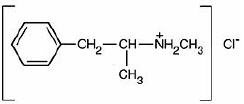
Methamphetamine hydrochloride tablets contain 5 mg of methamphetamine hydrochloride, USP for oral administration.
Inactive Ingredients
Corn starch, lactose monohydrate, stearic acid and talc.
CLINICAL PHARMACOLOGY
Methamphetamine is a sympathomimetic amine with CNS stimulant activity. Peripheral actions include elevation of systolic and diastolic blood pressures and weak bronchodilator and respiratory stimulant action. Other central nervous system actions, or metabolic effects, may be involved, for example.
The mechanism of action involved in producing the beneficial behavioral changes seen in hyperkinetic children receiving methamphetamine is unknown.
In humans, methamphetamine is rapidly absorbed from the gastrointestinal tract. The primary site of metabolism is in the liver by aromatic hydroxylation, N-dealkylation and deamination. At least seven metabolites have been identified in the urine. The biological half-life has been reported in the range of 4 to 5 hours. Excretion occurs primarily in the urine and is dependent on urine pH. Alkaline urine will significantly increase the drug half-life. Approximately 62% of an oral dose is eliminated in the urine within the first 24 hours with about one-third as intact drug and the remainder as metabolites.
HOW SUPPLIED
Methamphetamine Hydrochloride Tablets, USP are available containing 5 mg of methamphetamine hydrochloride, USP.
The 5 mg tablets are white, round, unscored tablets debossed with 115 on one side of the tablet and blank on the other side. They are available as follows:
NDC 68308-115-01 bottles of 100 tablets
Store at 20° to 25°C (68° to 77°F). [See USP Controlled Room Temperature.] Protect from light.
Dispense in a tight, light-resistant container as defined in the USP using a child-resistant closure.
Medication Guides available at products.maynepharma.com or call 1-844-825-8500.
