Galbriela - Norethindrone And Ethinyl Estradiol And Ferrous Fumarate prescribing information

WARNING: CIGARETTE SMOKING AND SERIOUS CARDIOVASCULAR EVENTS
Cigarette smoking increases the risk of serious cardiovascular events from combination oral contraceptive (COC) use. This risk increases with age, particularly in women over 35 years of age, and with the number of cigarettes smoked. For this reason, COCs should not be used by women who are over 35 years of age and smoke [see Contraindications (4) and Warnings & Precautions (5.1) ].
INDICATIONS AND USAGE
Galbriela (norethindrone and ethinyl estradiol chewable tablet and ferrous fumarate chewable tablet) is indicated for use by women to prevent pregnancy.
The efficacy of Galbriela in women with a body mass index (BMI) of > 35 kg/m 2 has not been evaluated.
DOSAGE AND ADMINISTRATION
How to Take Galbriela
To achieve maximum contraceptive effectiveness, Galbriela must be taken exactly as directed. Chew and swallow one tablet without water at the same time every day. Tablets must be taken in the order directed on the blister pack. Tablets should not be skipped or taken at intervals exceeding 24 hours. For patient instructions for missed pills, see FDA-Approved Patient Labeling . Galbriela may be administered without regard to meals [see Clinical Pharmacology (12.3) ] .
How to Start Galbriela
Instruct the patient to begin taking Galbriela on Day 1 of her menstrual cycle (that is, the first day of her menstrual bleeding). One dark yellow tablet should be taken daily for 24 consecutive days followed by one brown tablet daily for 4 consecutive days. Instruct the patient to use a non-hormonal contraceptive as back-up during the first 7 days if she starts taking Galbriela other than on the first day of her menstrual cycle.
For postpartum women who do not breastfeed or after a second trimester abortion, Galbriela may be started no earlier than 4 weeks postpartum. Recommend use of a non-hormonal back-up method for the first 7 days. When combined oral contraceptives (COCs) are used during the postpartum period, the increased risk of thromboembolic disease associated with the postpartum period must be considered. The possibility of ovulation and conception before starting COCs should also be considered.
If the patient is switching from a combination hormonal method such as:
- Another pill
- Vaginal ring
- Patch
Instruct her to take the first dark yellow pill on the day she would have started a new cycle of her previous birth control pack (Day 1).
If she previously used a vaginal ring or transdermal patch, she should start using Galbriela on the day she would have restarted the ring or patch.
Instruct the patient to use a non-hormonal back-up method such as a condom and spermicide for the first 7 days.
If the patient is switching from a progestin-only method such as:
- Progestin-only pill
- Implant
- Intrauterine system
- Injection
Instruct her to take the first dark yellow pill on the day she would have taken her next progestin-only pill or on the day of removal of her implant or intrauterine system or on the day when she would have had her next injection.
Instruct the patient to use a non-hormonal back-up method such as a condom and spermicide for the first 7 days.
Missed Doses
| If one dark yellow tablet is missed | Take the missed tablet as soon as possible. Take the next tablet at the regular time. Continue taking one tablet a day until the pack is finished. Additional nonhormonal contraception (such as condoms) is not needed. |
| If two dark yellow tablets in a row are missed in Week 1 or Week 2 of the tablet pack | Take the two missed tablets as soon as possible, and the next two tablets the next day. Continue taking one tablet a day until the pack is finished. Use additional nonhormonal contraception (such as condoms) until hormonal tablets have been taken for 7 days after missing tablets. |
| If two dark yellow tablets in a row are missed in Week 3 or Week 4 of the tablet pack | Throw away the remainder of the tablet pack. Start a new tablet pack the same day. Use additional nonhormonal contraception (such as condoms) until hormonal tablets have been taken for 7 days after missing tablets. |
| If three or more dark yellow tablets in a row are missed | Throw away the missed tablets. Continue taking one tablet every day as indicated on the pack until the pack is finished. Bleeding may occur during the week following the missed tablets. Use additional nonhormonal contraception (such as condoms) until hormonal tablets have been taken for 7 days after missing tablets. |
| If any of the four brown tablets are missed | Throw away the missed tablets. Continue taking the remaining tablets until the pack is finished. Additional nonhormonal contraception (such as condoms) is not needed. |
Advice in Case of Gastrointestinal Disturbances
In case of severe vomiting or diarrhea, absorption may not be complete and additional contraceptive measures should be taken. If vomiting or diarrhea occurs within 3-4 hours after taking a dark yellow tablet, this can be regarded as a missed tablet [see Dosage and Administration (2.3) ].
DOSAGE FORMS AND STRENGTHS
Galbriela is available in blister packs.
Each blister pack (28 tablets) contains in the following order:
24 dark yellow, round tablets (active) debossed with 259 on one side and other side plain and each containing 0.8 mg norethindrone and 0.025 mg ethinyl estradiol.
4 brown, round tablets (non-hormonal placebo) debossed with 310 on one side and other side plain and each containing 75 mg ferrous fumarate. The ferrous fumarate chewable tablets do not serve any therapeutic purpose.
USE IN SPECIFIC POPULATIONS
Lactation: Not recommended, norethindrone and ethinyl estradiol tablets (chewable) and ferrous fumarate tablets (chewable) can decrease milk production. (8.2 )
Pregnancy
Risk Summary
There is no use for contraception in pregnancy; therefore, norethindrone and ethinyl estradiol tablets (chewable) and ferrous fumarate tablets (chewable) should be discontinued during pregnancy. Epidemiologic studies and meta-analyses have not found an increased risk of genital or nongenital birth defects (including cardiac anomalies and limb-reduction defects) following exposure to COCs before conception or during early pregnancy. In the U.S. general population, the estimated background risk of major birth defects and miscarriage in clinically recognized pregnancies is 2 to 4 percent and 15 to 20 percent, respectively.
Lactation
Risk Summary
Contraceptive hormones and/or metabolites are present in human milk. COCs can reduce milk production in breast-feeding females. This reduction can occur at any time but is less likely to occur once breast-feeding is well-established. When possible, advise the nursing female to use other methods of contraception until she discontinues breast-feeding [see Dosage and Administration (2.2) ]. The developmental and health benefits of breast-feeding should be considered along with the mother’s clinical need for norethindrone and ethinyl estradiol tablets (chewable) and ferrous fumarate tablets (chewable) and any potential adverse effects on the breast-fed child from norethindrone and ethinyl estradiol tablets (chewable) and ferrous fumarate tablets (chewable) or from the underlying maternal condition.
Pediatric Use
Safety and efficacy of norethindrone and ethinyl estradiol tablets (chewable) and ferrous fumarate tablets (chewable) have been established in women of reproductive age. Efficacy is expected to be the same in postpubertal adolescents under the age of 18 years as for users 18 years and older. Use of this product before menarche is not indicated.
Geriatric Use
Norethindrone and ethinyl estradiol tablets (chewable) and ferrous fumarate tablets (chewable) have not been studied in postmenopausal women and is not indicated in this population.
Renal Impairment
The pharmacokinetics of norethindrone and ethinyl estradiol tablets (chewable) and ferrous fumarate tablets (chewable) have not been studied in subjects with renal impairment.
Hepatic Impairment
No studies have been conducted to evaluate the effect of hepatic disease on the disposition of norethindrone and ethinyl estradiol tablets (chewable) and ferrous fumarate tablets (chewable). However, steroid hormones may be poorly metabolized in patients with impaired liver function. Acute or chronic disturbances of liver function may necessitate the discontinuation of COC use until markers of liver function return to normal [see Contraindications (4) , and Warnings and Precautions (5.3) ].
Body Mass Index
The safety and efficacy of norethindrone and ethinyl estradiol tablets (chewable) and ferrous fumarate tablets (chewable) in women with a BMI > 35 kg/m 2 have not been evaluated.
CONTRAINDICATIONS
Galbriela is contraindicated in females who are known to have or develop the following conditions:
A high risk of arterial or venous thrombotic diseases. Examples include women who are known to:
Smoke, if over age 35 [see Boxed Warning , and Warnings and Precautions (5.1) ]
- Have deep vein thrombosis or pulmonary embolism, now or in the past [see Warnings and Precautions (5.1) ]
- Have cerebrovascular disease [see Warnings and Precautions (5.1) ]
- Have coronary artery disease [see Warnings and Precautions (5.1) ]
- Have thrombogenic valvular or thrombogenic rhythm diseases of the heart (for example, subacute bacterial endocarditis with valvular disease, or atrial fibrillation) [see Warnings and Precautions (5.1) ]
- Have inherited or acquired hypercoagulopathies [see Warnings and Precautions (5.1) ]
- Have uncontrolled hypertension [see Warnings and Precautions (5.5) ]
- Have diabetes with vascular disease [see Warnings and Precautions (5.7) ]
- Have headaches with focal neurological symptoms or have migraine headaches with or without aura if over age 35 [see Warnings and Precautions (5.8) ]
Current diagnosis of, or history of, breast cancer, which may be hormone-sensitive [see Warnings and Precautions (5.2) ]
Liver tumors, benign or malignant, or liver disease [see Warnings and Precautions (5.3) , Use in Specific Populations (8.7) , and Clinical Pharmacology (12.3) ]
Undiagnosed abnormal uterine bleeding [see Warnings and Precautions (5.9) ]
Use of Hepatitis C drug combinations containing ombitasvir/paritaprevir/ritonavir, with or without dasabuvir, due to the potential for ALT elevations [see Warnings and Precautions (5.4) ]
WARNINGS AND PRECAUTIONS
Vascular risks: Stop norethindrone and ethinyl estradiol tablets (chewable) and ferrous fumarate tablets (chewable) if a thrombotic event occurs. Stop at least 4 weeks before and through 2 weeks after major surgery. Start no earlier than 4 weeks after delivery in women who are not breastfeeding. (5.1 )
Liver disease: Discontinue if jaundice occurs. (5.3 )
High blood pressure: Do not prescribe for women with uncontrolled hypertension or hypertension with vascular disease. (5.5 )
Carbohydrate and lipid metabolic effects: Monitor prediabetic and diabetic women taking norethindrone and ethinyl estradiol tablets (chewable) and ferrous fumarate tablets (chewable). Consider an alternate contraceptive method for women with uncontrolled dyslipidemia. (5.7 )
Headache: Evaluate significant change in headaches and discontinue if indicated. (5.8 )
Uterine bleeding: Evaluate irregular bleeding or amenorrhea. (5.9 )
Thrombotic and Other Vascular Events
Stop norethindrone and ethinyl estradiol tablets (chewable) and ferrous fumarate tablets (chewable) if an arterial or deep venous thrombotic (VTE) event occurs. Although the use of COCs increases the risk of venous thromboembolism, pregnancy increases the risk of venous thromboembolism as much or more than the use of COCs. The risk of venous thromboembolism in women using COCs is 3 to 9 per 10,000 woman-years. The excess risk is highest during the first year of use of a COC. Use of COCs also increases the risk of arterial thromboses such as strokes and myocardial infarctions, especially in women with other risk factors for these events. The risk of thromboembolic disease due to oral contraceptives gradually disappears after COC use is discontinued.
If feasible, stop norethindrone and ethinyl estradiol tablets (chewable) and ferrous fumarate tablets (chewable) at least 4 weeks before and through 2 weeks after major surgery or other surgeries known to have an elevated risk of thromboembolism.
Start norethindrone and ethinyl estradiol tablets (chewable) and ferrous fumarate tablets (chewable) no earlier than 4 weeks after delivery, in women who are not breastfeeding. The risk of postpartum thromboembolism decreases after the third postpartum week, whereas the risk of ovulation increases after the third postpartum week.
COCs have been shown to increase both the relative and attributable risks of cerebrovascular events (thrombotic and hemorrhagic strokes), although, in general, the risk is greatest among older (>35 years of age), hypertensive women who also smoke. COCs also increase the risk for stroke in women with other underlying risk factors.
Oral contraceptives must be used with caution in women with cardiovascular disease risk factors.
Stop norethindrone and ethinyl estradiol tablets (chewable) and ferrous fumarate tablets (chewable) if there is unexplained loss of vision, proptosis, diplopia, papilledema, or retinal vascular lesions. Evaluate for retinal vein thrombosis immediately.
Malignant Neoplasms
Breast Cancer
Norethindrone and ethinyl estradiol tablets (chewable) and ferrous fumarate tablets (chewable) are contraindicated in females who currently have or have had breast cancer because breast cancer may be hormonally sensitive [see Contraindications (4) ] .
Epidemiology studies have not found a consistent association between use of combined oral contraceptives (COCs) and breast cancer risk. Studies do not show an association between ever (current or past) use of COCs and risk of breast cancer. However, some studies report a small increase in the risk of breast cancer among current or recent users (<6 months since last use) and current users with longer duration of COC use [see Adverse Reactions (6.2) ].
Cervical Cancer
Some studies suggest that COCs are associated with an increase in the risk of cervical cancer or intraepithelial neoplasia. However, there is controversy about the extent to which these findings may be due to differences in sexual behavior and other factors.
Liver Disease
Discontinue norethindrone and ethinyl estradiol tablets (chewable) and ferrous fumarate tablets (chewable) if jaundice develops. Steroid hormones may be poorly metabolized in patients with impaired liver function. Acute or chronic disturbances of liver function may necessitate the discontinuation of COC use until markers of liver function return to normal and COC causation has been excluded.
Hepatic adenomas are associated with COC use. An estimate of the attributable risk is 3.3 cases/100,000 COC users. Rupture of hepatic adenomas may cause death through intra-abdominal hemorrhage.
Studies have shown an increased risk of developing hepatocellular carcinoma in long-term (>8 years) COC users. However, the attributable risk of liver cancers in COC users is less than one case per million users.
Oral contraceptive-related cholestasis may occur in women with a history of pregnancy-related cholestasis. Women with a history of COC-related cholestasis may have the condition recur with subsequent COC use.
Risk of Liver Enzyme Elevations with Concomitant Hepatitis C Treatment
During clinical trials with Hepatitis C combination drug regimen that contains ombitasvir/paritaprevir/ritonavir, with or without dasabuvir, ALT elevations greater than 5 times the upper limit of normal (ULN), including some cases greater than 20 times the ULN, were significantly more frequent in women using ethinyl estradiol-containing medications, such as COCs. Discontinue norethindrone and ethinyl estradiol tablets (chewable) and ferrous fumarate tablets (chewable) prior to starting therapy with the combination drug regimen ombitasvir/paritaprevir/ritonavir, with or without dasabuvir [see Contraindications (4) ]. Norethindrone and ethinyl estradiol tablets (chewable) and ferrous fumarate tablets (chewable) can be restarted approximately 2 weeks following completion of treatment with the Hepatitis C combination drug regimen.
High Blood Pressure
For women with well-controlled hypertension, monitor blood pressure and stop norethindrone and ethinyl estradiol tablets (chewable) and ferrous fumarate tablets (chewable) if blood pressure rises significantly. Women with uncontrolled hypertension or hypertension with vascular disease should not use COCs.
An increase in blood pressure has been reported in women taking COCs, and this increase is more likely in older women and with extended duration of use. The incidence of hypertension increases with increasing concentration of progestin.
Gallbladder Disease
Studies suggest the relative risk of developing gallbladder disease may be increased among COC users.
Carbohydrate and Lipid Metabolic Effects
Carefully monitor prediabetic and diabetic women who are taking norethindrone and ethinyl estradiol tablets (chewable) and ferrous fumarate tablets (chewable). COCs may decrease glucose tolerance in a dose-related fashion.
Consider alternative contraception for women with uncontrolled dyslipidemia. A small proportion of women will have adverse lipid changes while on COCs.
Women with hypertriglyceridemia, or a family history thereof, may be at an increased risk of pancreatitis when using COCs.
Headache
If a woman taking norethindrone and ethinyl estradiol tablets (chewable) and ferrous fumarate tablets (chewable) develops new headaches that are recurrent, persistent, or severe, evaluate the cause and discontinue norethindrone and ethinyl estradiol tablets (chewable) and ferrous fumarate tablets (chewable) if indicated.
An increase in frequency or severity of migraine during COC use (which may be prodromal of a cerebrovascular event) may be a reason for immediate discontinuation of the COC.
Bleeding Irregularities
Unscheduled (breakthrough or intracyclic) bleeding and spotting sometimes occur in patients on COCs, especially during the first three months of use. If bleeding persists or occurs after previously regular cycles, check for causes such as pregnancy or malignancy. If pathology and pregnancy are excluded, bleeding irregularities may resolve over time or with a change to a different COC.
Patient diaries from the clinical trial of norethindrone and ethinyl estradiol tablets (chewable) and ferrous fumarate tablets (chewable) showed that on the first cycle of use, 37% of subjects taking norethindrone and ethinyl estradiol tablets (chewable) and ferrous fumarate tablets (chewable) had unscheduled bleeding and/or spotting. From Cycle 2-13, the percent of women with unscheduled bleeding/spotting ranged from 21-31% per cycle. For those women with unscheduled bleeding/spotting, the mean number of days of unscheduled bleeding/spotting was 5.2 in the first cycle of use and ranged from 3.6-4.2 in Cycles 2-13. A total of 15 subjects out of 1,677 (0.9%) discontinued the study prematurely due to metrorrhagia or irregular menstruation.
Women who are not pregnant and use norethindrone and ethinyl estradiol tablets (chewable) and ferrous fumarate tablets (chewable) may not have scheduled (withdrawal) bleeding every cycle or may experience amenorrhea (absence of any bleeding and spotting). The incidence of amenorrhea in the clinical trial increased from 8.1% of the subjects in Cycle 2 to 18.4% by Cycle 13. For those women who had scheduled (withdrawal) bleeding, the average duration of bleeding per cycle in Cycles 2-13 was 3.7 days.
If the patient has not adhered to the prescribed dosing schedule (missed one or more active tablets or started taking them on a day later than she should have), consider the possibility of pregnancy at the time of the first missed period and take appropriate diagnostic measures. If the patient has adhered to the prescribed regimen and misses two consecutive periods, rule out pregnancy.
Some women may encounter amenorrhea or oligomenorrhea after stopping COCs, especially when such a condition was pre-existent.
COC Use Before or During Early Pregnancy
Extensive epidemiological studies have revealed no increased risk of birth defects in women who have used oral contraceptives prior to pregnancy. Studies also do not suggest a teratogenic effect, particularly in so far as cardiac anomalies and limb-reduction defects are concerned, when taken inadvertently during early pregnancy. Norethindrone and ethinyl estradiol tablets (chewable) and ferrous fumarate tablets (chewable) use should be discontinued if pregnancy is confirmed.
The administration of oral contraceptives to induce withdrawal bleeding should not be used as a test for pregnancy [see Use in Specific Populations (8.1) ] .
Depression
Women with a history of depression should be carefully observed and norethindrone and ethinyl estradiol tablets (chewable) and ferrous fumarate tablets (chewable) discontinued if depression recurs to a serious degree.
Interference with Laboratory Tests
The use of COCs may change the results of some laboratory tests, such as coagulation factors, lipids, glucose tolerance, and binding proteins. Women on thyroid hormone replacement therapy may need increased doses of thyroid hormone because serum concentrations of thyroid-binding globulin increase with use of COCs.
Monitoring
A woman who is taking COCs should have a yearly visit with her healthcare provider for a blood pressure check and for other indicated healthcare.
Other Conditions
In women with hereditary angioedema, exogenous estrogens may induce or exacerbate symptoms of angioedema. Chloasma may occasionally occur, especially in women with a history of chloasma gravidarum. Women with a tendency to chloasma should avoid exposure to the sun or ultraviolet radiation while taking COCs.
ADVERSE REACTIONS
The following serious adverse reactions with the use of COCs are discussed elsewhere in the labeling:
Serious cardiovascular events and smoking [see Boxed Warning , and Warnings and Precautions (5.1) ]
Vascular events [see Warnings and Precautions (5.1) ]
Liver disease [see Warnings and Precautions (5.3) ]
Adverse reactions commonly reported by COC users are:
Irregular uterine bleeding
Nausea
Breast tenderness
Headache
Clinical Trial Experience
Because clinical trials are conducted under widely varying conditions, adverse reaction rates observed in the clinical trials of a drug cannot be directly compared to rates in the clinical trials of another drug and may not reflect the rates observed in clinical practice.
A phase 3 clinical trial evaluated the safety and efficacy of norethindrone and ethinyl estradiol tablets (chewable) and ferrous fumarate tablets (chewable) for pregnancy prevention. The study was a multicenter, non-comparative, open-label study with a treatment duration of 12 months (thirteen 28-day cycles). A total of 1,677 women aged 18-46 were enrolled and took at least one dose of norethindrone and ethinyl estradiol tablets (chewable) and ferrous fumarate tablets (chewable).
Adverse Reactions Leading to Study Discontinuation:
8.5% of the women discontinued from the clinical trial due to an adverse reaction. The most common adverse reactions leading to discontinuation were nausea (1.0%), weight increase (0.8%), acne (0.8%), metrorrhagia (0.7%), altered mood (0.4%), hypertension (0.4%), irritability (0.3%), migraine (0.3%), decreased libido (0.3%) and mood swings (0.3%).
Common Adverse Reactions (≥ 2% of all treated subjects):
nausea/vomiting (8.8%), headaches/migraine (7.5%), depression/mood complaints (4.1%), dysmenorrhea (3.9%), acne (3.2%), anxiety symptoms (2.4%), breast pain/tenderness (2.4%), and increased weight (2.3%).
Serious Adverse Reactions:
Hypertension, depression, cholecystitis, and deep vein thrombosis.
Postmarketing Experience
Five studies that compared breast cancer risk between ever-users (current or past use) of COCs and never-users of COCs reported no association between ever use of COCs and breast cancer risk, with effect estimates ranging from 0.90 - 1.12 (Figure 1).
Three studies compared breast cancer risk between current or recent COC users (<6 months since last use) and never users of COCs (Figure 1). One of these studies reported no association between breast cancer risk and COC use. The other two studies found an increased relative risk of 1.19 - 1.33 with current or recent use. Both of these studies found an increased risk of breast cancer with current use of longer duration, with relative risks ranging from 1.03 with less than one year of COC use to approximately 1.4 with more than 8-10 years of COC use.
Figure 1: Relevant Studies of Risk of Breast Cancer with Combined Oral Contraceptives
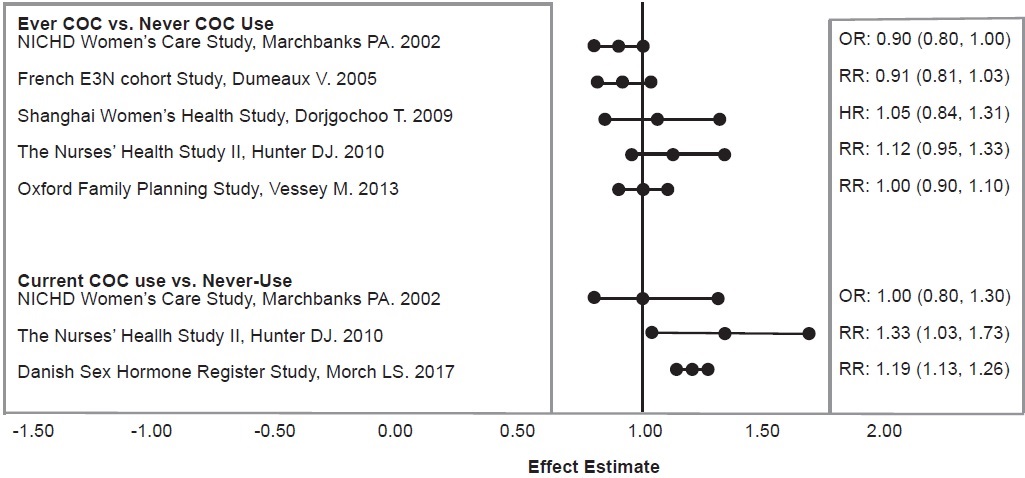
RR = relative risk; OR = odds ratio; HR = hazard ratio. “ever COC” are females with current or past COC use; “never COC use” are females that never used COCs.
DRUG INTERACTIONS
No drug-drug interaction studies were conducted with norethindrone and ethinyl estradiol tablets (chewable) and ferrous fumarate tablets (chewable).
Changes in Contraceptive Effectiveness Associated with Co-Administration of Other Products
If a woman on hormonal contraceptives takes a drug or herbal product that induces enzymes, including CYP3A4, that metabolize contraceptive hormones, counsel her to use additional contraception or a different method of contraception. Drugs or herbal products that induce such enzymes may decrease the plasma concentrations of contraceptive hormones, and may decrease the effectiveness of hormonal contraceptives or increase breakthrough bleeding. Some drugs or herbal products that may decrease the effectiveness of hormonal contraceptives include:
barbiturates
bosentan
carbamazepine
felbamate
griseofulvin
oxcarbazepine
phenytoin
rifampin
St. John's wort
topiramate
HIV protease inhibitors and non-nucleoside reverse transcriptase inhibitors: Significant changes (increase or decrease) in the plasma levels of the estrogen and progestin have been noted in some cases of co-administration of HIV protease inhibitors or with non-nucleoside reverse transcriptase inhibitors.
Antibiotics: There have been reports of pregnancy while taking hormonal contraceptives and antibiotics, but clinical pharmacokinetic studies have not shown consistent effects of antibiotics on plasma concentrations of synthetic steroids.
Consult the labeling of all concurrently-used drugs to obtain further information about interactions with hormonal contraceptives or the potential for enzyme alterations.
Increase in Plasma Levels of Ethinyl Estradiol Associated with Co-Administered Drugs
Co-administration of atorvastatin and certain combination oral contraceptives containing ethinyl estradiol increase AUC values for ethinyl estradiol by approximately 20%. Ascorbic acid and acetaminophen may increase plasma ethinyl estradiol levels, possibly by inhibition of conjugation. CYP3A4 inhibitors such as itraconazole or ketoconazole may increase plasma hormone levels.
Concomitant Use with HCV Combination Therapy – Liver Enzyme Elevation
Do not co-administer norethindrone and ethinyl estradiol tablets (chewable) and ferrous fumarate tablets (chewable) with HCV drug combinations containing ombitasvir/paritaprevir/ritonavir, with or without dasabuvir, due to potential for ALT elevations [see Warnings and Precautions (5.4) ].
Changes in Plasma Levels of Co-Administered Drugs
COCs containing some synthetic estrogens (e.g., ethinyl estradiol) may inhibit the metabolism of other compounds. COCs have been shown to significantly decrease plasma concentrations of lamotrigine, likely due to induction of lamotrigine glucuronidation. This may reduce seizure control; therefore, dosage adjustments of lamotrigine may be necessary. Consult the labeling of the concurrently-used drug to obtain further information about interactions with COCs or the potential for enzyme alterations.
DESCRIPTION
Galbriela (norethindrone and ethinyl estradiol chewable tablets and ferrous fumarate chewable tablets) provides an oral contraceptive regimen consisting of 24 tablets that contain the active ingredients specified below, followed by four non-hormonal placebo tablets:
24 dark yellow, round tablets each containing 0.8 mg norethindrone and 0.025 mg ethinyl estradiol
4 brown, round tablets each containing 75 mg ferrous fumarate
Each dark yellow tablet also contains the following inactive ingredients: lactose monohydrate, anhydrous lactose, sodium starch glycolate type A (potato), D&C Yellow No. 10 Aluminum Lake, povidone K-30, calcium phosphate (dibasic dehydrate), colloidal silicon dioxide, maltodextrin, sucralose, spearmint flavor and magnesium stearate.
Each brown, round tablet contains ferrous fumarate, microcrystalline cellulose, lactose monohydrate, povidone K-90, croscarmellose sodium, colloidal silicon dioxide, sucralose, spearmint flavor, magnesium stearate. The ferrous fumarate tablets (chewable) do not serve any therapeutic purpose. Ferrous fumarate chewable tablets are not USP for dissolution and assay.
The molecular formula of ethinyl estradiol is C 20 H 24 O 2 and the chemical structure is:
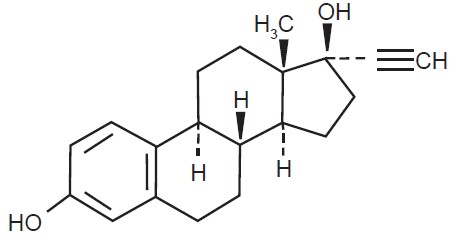
The chemical name of ethinyl estradiol is [19-Norpregna-1,3,5(10)-trien-20-yne-3,17-diol, (17α)-]
The molecular formula of norethindrone is C 20 H 26 O 2 and the chemical structure is:
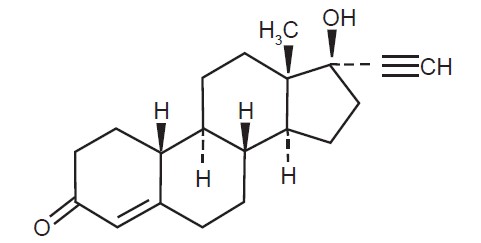
The chemical name of norethindrone is [17-hydroxy-19-nor-17α-pregn-4-en-20-yn-3-one]
CLINICAL PHARMACOLOGY
Mechanism of Action
COCs lower the risk of becoming pregnant primarily by suppressing ovulation.
Pharmacodynamics
No specific pharmacodynamic studies were conducted with Galbriela.
Pharmacokinetics
Absorption
Norethindrone and ethinyl estradiol are absorbed with maximum plasma concentrations occurring within 2 hours after Galbriela administration (see Table 2). Both are subject to first-pass metabolism after oral dosing, resulting in an absolute bioavailability of approximately 64% for norethindrone and 43% for ethinyl estradiol.
The plasma norethindrone and ethinyl estradiol pharmacokinetics following single- and multiple-dose administrations of Galbriela in 17 healthy female volunteers are provided in Table 2.
Following multiple-dose administration of Galbriela, mean maximum concentrations of norethindrone and ethinyl estradiol were increased by 126% and 14%, respectively, as compared to single-dose administration. Mean norethindrone and ethinyl estradiol exposures (AUC values) were increased by 239% and 55% respectively, as compared to single-dose administration of Galbriela.
Mean sex hormone binding globulin (SHBG) concentrations were increased by 170% from baseline (40.0 pg/mL; CV = 65%) to 108 pg/mL (CV = 45%) at steady-state.
a The harmonic mean for t ½ is presented EE = ethinyl estradiol; NE = norethindrone %CV = coefficient of variation; C max = maximum plasma concentration (pg/mL); t max = time of the maximum measured plasma concentration (h); AUC (0–24h) = area under the plasma concentration versus time curve from time 0 to 24h (pg·h/mL); t ½ = apparent elimination half life (h) | |||||
Arithmetic mean parameters (%CV) | |||||
Regimen | Analyte | C max | t max | AUC (0-24h) | t ½ a |
Day 1 (Single Dose) N = 17 | NE | 9,840 (36) | 1.4 (49) | 41,680 (47) | |
EE | 147 (25) | 1.2 (27) | 903 (18) | ||
Day 24 (Multiple Dose) N = 17 | NE | 22,200 (30) | 1.6 (76) | 141,200 (32) | 10.8 |
EE | 168 (25) | 1.2 (35) | 1,400 (32) | 17.1 | |
Food Effect
Galbriela may be administered with or without food. A single-dose administration of Galbriela with food decreased the maximum concentration of norethindrone by 47% and increased the extent of absorption by 10-14% and decreased the maximum concentration of ethinyl estradiol by 39% but not the extent of absorption.
Distribution
Volume of distribution of norethindrone and ethinyl estradiol ranges from 2 to 4 L/kg. Plasma protein binding of both steroids is extensive (> 95%); norethindrone binds to both albumin and SHBG, whereas ethinyl estradiol binds only to albumin. Although ethinyl estradiol does not bind to SHBG, it induces SHBG synthesis.
Metabolism
Norethindrone undergoes extensive biotransformation, primarily via reduction, followed by sulfate and glucuronide conjugation. The majority of metabolites in the circulation are sulfates, with glucuronides accounting for most of the urinary metabolites. A small amount of norethindrone is metabolically converted to ethinyl estradiol, such that exposure to ethinyl estradiol following administration of 1 mg of norethindrone acetate is equivalent to oral administration of 2.8 mcg ethinyl estradiol; therefore 0.8 mg norethindrone would be equivalent to the oral administration of 2.6 mcg ethinyl estradiol.
Ethinyl estradiol is also extensively metabolized, both by oxidation and by conjugation with sulfate and glucuronide. Sulfates are the major circulating conjugates of ethinyl estradiol and glucuronides predominate in urine. The primary oxidative metabolite is 2-hydroxy ethinyl estradiol, formed by the CYP3A4 isoform of cytochrome P450. Part of the first-pass metabolism of ethinyl estradiol is believed to occur in gastrointestinal mucosa. Ethinyl estradiol may undergo enterohepatic circulation.
Excretion
Norethindrone and ethinyl estradiol are excreted in both urine and feces, primarily as metabolites. Plasma clearance values for norethindrone and ethinyl estradiol are similar (approximately 0.4 L/hr/kg). Elimination half-lives of norethindrone and ethinyl estradiol following administration of 0.8 mg norethindrone / 0.025 mcg ethinyl estradiol tablets are approximately 11 hours and 17 hours, respectively.
Specific Populations
Pediatric Use: Safety and efficacy of Galbriela have been established in women of reproductive age. Efficacy is expected to be the same for postpubertal adolescents under the age of 18 and for users 18 years and older. Use of this product before menarche is not indicated.
Geriatric Use: Galbriela has not been studied in postmenopausal women and is not indicated in this population.
Renal Impairment: The pharmacokinetics of Galbriela have not been studied in subjects with renal impairment.
Hepatic Impairment: The pharmacokinetics of Galbriela have not been studied in subjects with hepatic impairment. Steroid hormones may be poorly metabolized in patients with impaired liver function. Acute or chronic disturbances of liver function may necessitate the discontinuation of COC use until markers of liver function return to normal [see Contraindications (4) , and Warnings and Precautions (5.3) ].
Body Mass Index: The efficacy of Galbriela in women with a BMI of >35 kg/m 2 has not been evaluated.
NONCLINICAL TOXICOLOGY
Carcinogenesis, Mutagenesis, Impairment of Fertility
[See Warnings and Precautions (5.2 , 5.3 ).]
CLINICAL STUDIES
Oral Contraceptive Clinical Trial
In a one-year (thirteen 28-day cycles) multicenter, open-label clinical trial, 1,677 women 18 to 46 years of age were studied to assess the safety and efficacy of norethindrone and ethinyl estradiol tablets (chewable) and ferrous fumarate tablets (chewable). The ethnic origin of the 1,570 treated subjects who were evaluable for efficacy was: Caucasian (72.0%), African-American (13.0%), Hispanic (11.2%) and Asian (1.8%). The weight range was 74 to 243 pounds with a mean weight of 148.8 pounds. Of treated women, 16.2% were lost to follow-up, 8.9% discontinued by withdrawing their consent and 8.5% discontinued due to an adverse event.
The pregnancy rate (Pearl Index) in 1,251 women 18 to 35 years of age was 2.01 (95% confidence interval 1.21, 3.14) pregnancies per 100 women-years of treatment based on 19 pregnancies that occurred after onset of treatment and within 7 days after the last pill in 12,297 cycles of treatment during which no back-up contraception was used.
HOW SUPPLIED/STORAGE AND HANDLING
How Supplied
Galbriela is available in cartons of 3 pouches (NDC 70700-306-85); each pouch (NDC 70700-306-84) contains a blister pack of 28 tablets. Each blister pack contains 24 dark yellow, round, flat-faced tablets debossed with 259 on one side and plain on the other side and 4 brown, round, flat-faced, tablets debossed with 310 on one side and plain on the other side. Each dark yellow tablet contains 0.8 mg norethindrone and 0.025 mg ethinyl estradiol and each brown tablet contains 75 mg ferrous fumarate.
Storage Conditions
Store at 20° to 25°C (68° to 77°F). [See USP Controlled Room Temperature.]
Keep out of reach of children.
Mechanism of Action
COCs lower the risk of becoming pregnant primarily by suppressing ovulation.
