Depo - Provera - Medroxyprogesterone Acetate injection, Suspension prescribing information

WARNING: LOSS OF BONE MINERAL DENSITY
- Women who use Depo-Provera Contraceptive Injection (Depo-Provera CI) may lose significant bone mineral density. Bone loss is greater with increasing duration of use and may not be completely reversible [see Warnings and Precautions (5.1) ] .
- It is unknown if use of Depo-Provera CI during adolescence or early adulthood, a critical period of bone accretion, will reduce peak bone mass and increase the risk for osteoporotic fracture in later life [see Warnings and Precautions (5.1) ] .
- Depo-Provera CI is not recommended as a long-term (i.e., longer than 2 years) birth control method unless other options are considered inadequate [see Indications and Usage (1) and Warnings and Precautions (5.1) ] .
Warnings and Precautions, Meningioma (5.4 ) | 12/2025 |
INDICATIONS AND USAGE
Depo-Provera CI is indicated for use by females of reproductive potential to prevent pregnancy.
Limitations of Use :
The use of Depo-Provera CI is not recommended as a long-term (i.e., longer than 2 years) birth control method unless other options are considered inadequate [see Dosage and Administration (2.1) and Warnings and Precautions (5.1) ].
DOSAGE AND ADMINISTRATION
The recommended dose is 150 mg of Depo-Provera CI every 3 months (13 weeks) administered by deep, intramuscular (IM) injection in the gluteal or deltoid muscle. (2.1 )
Prevention of Pregnancy
Both the 1 mL vial and the 1 mL prefilled syringe of Depo-Provera CI should be vigorously shaken just before use to ensure that the dose being administered represents a uniform suspension.
The recommended dose is 150 mg of Depo-Provera CI every 3 months (13 weeks) administered by deep intramuscular (IM) injection using strict aseptic technique in the gluteal or deltoid muscle, rotating the sites with every injection. As with any IM injection, to avoid an inadvertent subcutaneous injection, body habitus should be assessed prior to each injection to determine if a longer needle is necessary particularly for gluteal IM injection.
Use for longer than 2 years is not recommended (unless other birth control methods are considered inadequate) due to the impact of long-term Depo-Provera CI treatment on bone mineral density (BMD) [see Warnings and Precautions (5.1) ] . Dosage does not need to be adjusted for body weight [see Clinical Studies (14.1) ] .
To ensure the patient is not pregnant at the time of the first injection, the first injection should be given ONLY during the first 5 days of a normal menstrual period or within the first 5-days post‑partum. In post‑partum mothers who exclusively breastfeed, administer Depo‑Provera CI during or after the sixth post‑partum week. If the time interval between injections is greater than 13 weeks, the physician should determine that the patient is not pregnant before administering the drug. The efficacy of Depo-Provera CI depends on adherence to the dosage schedule of administration.
Switching from Other Methods of Contraception
When switching from other contraceptive methods, Depo-Provera CI should be given in a manner that ensures continuous contraceptive coverage based upon the mechanism of action of both methods, (e.g., patients switching from oral contraceptives should have their first injection of Depo-Provera CI on the day after the last active tablet or at the latest, on the day following the final inactive tablet).
DOSAGE FORMS AND STRENGTHS
Sterile Aqueous suspension: 150 mg/mL
Prefilled syringes are available packaged with 22-gauge x 1 1/2 inch Terumo® SurGuard™ Needles.
USE IN SPECIFIC POPULATIONS
Pregnancy
Risk Summary
There is no use for contraception in pregnancy; therefore, Depo-Provera CI should be discontinued during pregnancy.
Epidemiologic studies and meta‑analyses have not found an increased risk of genital or non-genital birth defects (including cardiac anomalies and limb-reduction defects) following exposure to progestins before conception or during early pregnancy.
All pregnancies have a background risk of birth defect, loss, or other adverse outcomes. In the U.S. general population, the estimated background risk of major birth defects and miscarriage in clinically recognized pregnancies is 2-4% and 15-20%, respectively.
Lactation
Risk Summary
Although medroxyprogesterone acetate is detectable in the milk of mothers receiving Depo-Provera CI, milk composition, quality, and amount do not appear to be adversely affected. Effects on milk production and lactation initiation/duration remain unclear when administered before 6 weeks after delivery, therefore, in mothers who exclusively breastfeed, initiate Depo-Provera CI during or after the sixth post-partum week [see Dosage and Administration (2.1) ] .
No adverse effects in breastfed infants would be expected with maternal use of progestins. Neonates and infants exposed to medroxyprogesterone acetate from breast milk have been studied and no adverse effects have been noted.
The developmental and health benefits of breast-feeding should be considered along with the mother’s clinical need for Depo-Provera CI and any potential adverse effects on the breastfed child from Depo-Provera CI or from the underlying maternal condition.
Females and Males of Reproductive Potential
Depo-Provera CI is indicated for the prevention of pregnancy and would therefore be expected to impair female fertility until cessation of treatment. Women may experience a delay in return to ovulation and fertility (conception) following discontinuation of Depo-Provera CI [see Warnings and Precautions (5.15) ] .
Pediatric Use
Depo-Provera CI is not indicated before menarche. Use of Depo-Provera CI is associated with significant loss of BMD. This loss of BMD is of particular concern during adolescence and early adulthood, a critical period of bone accretion. In adolescents, interpretation of BMD results should take into account patient age and skeletal maturity. It is unknown if use of Depo-Provera CI by younger women will reduce peak bone mass and increase the risk of osteoporotic fractures in later life. Other than concerns about loss of BMD, the safety and effectiveness are expected to be the same for postmenarchal adolescents and adult women.
Geriatric Use
This product has not been studied in post-menopausal women and is not indicated in this population.
CONTRAINDICATIONS
The use of Depo-Provera CI is contraindicated in the following conditions:
- Active thrombophlebitis, or current or history of thromboembolic disorders, or cerebral vascular disease [see Warnings and Precautions (5.2) ] .
- Known or suspected malignancy of breast [see Warnings and Precautions (5.3) ] .
- Known hypersensitivity to Depo-Provera CI (medroxyprogesterone acetate) or any of its other ingredients [see Warnings and Precautions (5.6) ] .
- Significant liver disease [see Warnings and Precautions (5.8) ] .
- Undiagnosed vaginal bleeding [see Warnings and Precautions (5.11) ] .
WARNINGS AND PRECAUTIONS
- Thromboembolic Disorders: Discontinue Depo-Provera CI in patients who develop thrombosis. (5.2 )
- Cancer Risks: Monitor women with a strong family history of breast cancer carefully. (5.3 )
- Meningioma: Discontinue Depo-Provera CI if meningioma is diagnosed. Monitor patients for signs and symptoms of meningioma. (5.4 )
- Ectopic Pregnancy: Consider ectopic pregnancy if a woman using Depo-Provera CI becomes pregnant or complains of severe abdominal pain. (5.5 )
- Anaphylaxis and Anaphylactoid Reactions: Provide emergency medical treatment. (5.6 )
- Liver Function: Discontinue Depo-Provera CI if jaundice or disturbances of liver function develop. (5.8 )
- Carbohydrate Metabolism: Monitor diabetic patients carefully. (5.13 )
Loss of Bone Mineral Density
Use of Depo-Provera CI reduces serum estrogen levels and is associated with significant loss of bone mineral density (BMD). This loss of BMD is of particular concern during adolescence and early adulthood, a critical period of bone accretion. It is unknown if use of Depo-Provera CI by younger women will reduce peak bone mass and increase the risk for osteoporotic fracture in later life.
A study to assess the reversibility of loss of BMD in adolescents was conducted with Depo-Provera CI. After discontinuing Depo-Provera CI in these adolescents, mean BMD loss at the total hip and femoral neck did not fully recover by 5 years (60 months) post-treatment in the sub-group of adolescents who were treated for more than 2 years [see Clinical Studies (14.3) ]. Similarly, in adults, there was only partial recovery of mean BMD at the total hip, femoral neck, and lumbar spine towards baseline by 2 years post-treatment [see Clinical Studies (14.2) ].
The use of Depo-Provera CI is not recommended as a long-term (i.e., longer than 2 years) birth control method unless other options are considered inadequate. BMD should be evaluated when a woman needs to continue to use Depo-Provera CI long-term. In adolescents, interpretation of BMD results should take into account patient age and skeletal maturity.
Other birth control methods should be considered in the risk/benefit analysis for the use of Depo-Provera CI in women with osteoporosis risk factors. Depo-Provera CI can pose an additional risk in patients with risk factors for osteoporosis (e.g., metabolic bone disease, chronic alcohol and/or tobacco use, anorexia nervosa, strong family history of osteoporosis or chronic use of drugs that can reduce bone mass such as anticonvulsants or corticosteroids).
Thromboembolic Disorders
There have been reports of serious thrombotic events in women using Depo-Provera CI (150 mg). However, Depo-Provera CI has not been causally associated with the induction of thrombotic or thromboembolic disorders. Any patient who develops thrombosis while undergoing therapy with Depo-Provera CI should discontinue treatment unless she has no other acceptable options for birth control.
Do not re-administer Depo-Provera CI pending examination if there is a sudden partial or complete loss of vision or if there is a sudden onset of proptosis, diplopia, or migraine. Do not re-administer if examination reveals papilledema or retinal vascular lesions.
Cancer Risks
Breast Cancer
Women who have or have had a history of breast cancer should not use hormonal contraceptives, including Depo-Provera CI, because breast cancer may be hormonally sensitive [see Contraindications (4) ]. Women with a strong family history of breast cancer should be monitored with particular care.
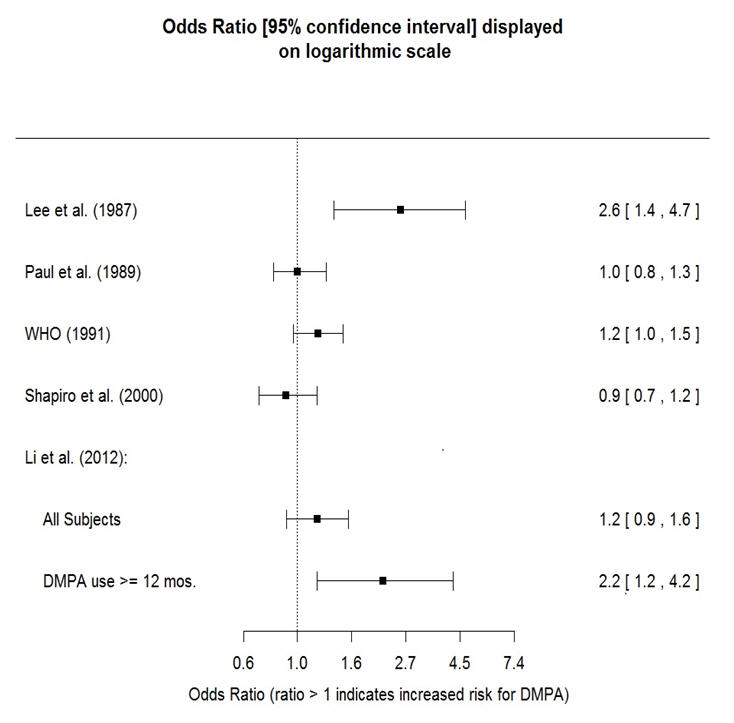
The results of five large case-control studies assessing the association between depo-medroxyprogesterone acetate (DMPA) use and the risk of breast cancer are summarized in Figure 1. Three of the studies suggest a slightly increased risk of breast cancer in the overall population of users; these increased risks were statistically significant in one study. One recent US study 1 evaluated the recency and duration of use and found a statistically significantly increased risk of breast cancer in recent users (defined as last use within the past five years) who used DMPA for 12 months or longer; this is consistent with results of a previous study 2 .
Figure 1. Risk estimates for breast cancer in DMPA users
| Odds ratio estimates were adjusted for the following covariates: |
| Lee et al. (1987): age, parity, and socioeconomic status. |
| Paul et al. (1989): age, parity, ethnic group, and year of interview. |
| WHO (1991): age, center, and age at first live birth. |
| Shapiro et al. (2000): age, ethnic group, socioeconomic status, and any combined estrogen/progestogen oral contraceptive use. |
| Li et al. (2012): age, year, BMI, duration of OC use, number of full-term pregnancies, family history of breast cancer, and history of screening mammography. |
 |
Based on the published SEER-18 2011 incidence rate (age-adjusted to the 2000 US Standard Population) of breast cancer for US women, all races, age 20 to 49 years, a doubling of risk would increase the incidence of breast cancer in women who use Depo-Provera CI from about 72 to about 144 cases per 100,000 women.
Cervical Cancer
A statistically nonsignificant increase in relative risk (RR) estimates of invasive squamous-cell cervical cancer has been associated with the use of Depo-Provera CI in women who were first exposed before the age of 35 years (RR 1.22 to 1.28 and 95% CI 0.93 to 1.70). The overall, nonsignificant RR of invasive squamous-cell cervical cancer in women who ever used Depo-Provera CI was estimated to be 1.11 (95% CI 0.96 to 1.29). No trends in risk with duration of use or times since initial or most recent exposure were observed.
Other Cancers
Long-term case-controlled surveillance of users of Depo-Provera CI found no overall increased risk of ovarian or liver cancer.
Meningioma
Cases of meningiomas have been reported following repeated administration of medroxyprogesterone acetate, primarily with long term use. Monitor patients on Depo-Provera CI for signs and symptoms of meningioma. Discontinue Depo-Provera CI if a meningioma is diagnosed.
Ectopic Pregnancy
Be alert to the possibility of an ectopic pregnancy among women using Depo-Provera CI who become pregnant or complain of severe abdominal pain.
Anaphylaxis and Anaphylactoid Reaction
Anaphylaxis and anaphylactoid reaction have been reported with the use of Depo-Provera CI. Institute emergency medical treatment if an anaphylactic reaction occurs.
Injection Site Reactions
Injection site reactions have been reported with use of Depo-Provera CI [see Adverse Reactions (6.2) ] . Persistent injection site reactions may occur after administration of Depo-Provera CI due to inadvertent subcutaneous administration or release of the drug into the subcutaneous space while removing the needle [see Dosage and Administration (2.1) ].
Liver Function
Discontinue Depo-Provera CI use if jaundice or acute or chronic disturbances of liver function develop. Do not resume use until markers of liver function return to normal and Depo-Provera CI causation has been excluded.
Convulsions
There have been a few reported cases of convulsions in patients who were treated with Depo-Provera CI. Association with drug use or pre-existing conditions is not clear.
Depression
Monitor patients who have a history of depression and do not re-administer Depo-Provera CI if depression recurs.
Bleeding Irregularities
Most women using Depo-Provera CI experience disruption of menstrual bleeding patterns. Altered menstrual bleeding patterns include amenorrhea, irregular or unpredictable bleeding or spotting, prolonged spotting or bleeding, and heavy bleeding. Rule out the possibility of organic pathology if abnormal bleeding persists or is severe, and institute appropriate treatment.
As women continue using Depo-Provera CI, fewer experience irregular bleeding and more experience amenorrhea. In clinical studies of Depo-Provera CI, by month 12 amenorrhea was reported by 55% of women, and by month 24, amenorrhea was reported by 68% of women using Depo-Provera CI.
Weight Gain
Women tend to gain weight while on therapy with Depo-Provera CI. From an initial average body weight of 136 lb, women who completed 1 year of therapy with Depo-Provera CI gained an average of 5.4 lb. Women who completed 2 years of therapy gained an average of 8.1 lb. Women who completed 4 years gained an average of 13.8 lb. Women who completed 6 years gained an average of 16.5 lb. Two percent of women withdrew from a large-scale clinical trial because of excessive weight gain.
Carbohydrate Metabolism
A decrease in glucose tolerance has been observed in some patients on Depo-Provera CI treatment. Monitor diabetic patients carefully while receiving Depo-Provera CI.
Fluid Retention
Because progestational drugs including Depo-Provera CI may cause some degree of fluid retention, monitor patients with conditions that might be influenced by this condition, such as epilepsy, migraine, asthma, and cardiac or renal dysfunction.
Return of Fertility
Return to ovulation and fertility is likely to be delayed after stopping Depo-Provera CI. In a large US study of women who discontinued use of Depo-Provera CI to become pregnant, data are available for 61% of them. Of the 188 women who discontinued the study to become pregnant, 114 became pregnant. Based on Life-Table analysis of these data, it is expected that 68% of women who do become pregnant may conceive within 12 months, 83% may conceive within 15 months, and 93% may conceive within 18 months from the last injection. The median time to conception for those who do conceive is 10 months following the last injection with a range of 4 to 31 months, and is unrelated to the duration of use. No data are available for 39% of the patients who discontinued Depo-Provera CI to become pregnant and who were lost to follow-up or changed their mind.
Sexually Transmitted Infections
Patients should be counseled that Depo-Provera CI does not protect against HIV infection (AIDS) and other sexually transmitted infections.
Monitoring
A woman who is taking hormonal contraceptive should have a yearly visit with her healthcare professional for a blood pressure check and for other indicated healthcare.
Interference with Laboratory Tests
The use of Depo-Provera CI may change the results of some laboratory tests, such as coagulation factors, lipids, glucose tolerance, and binding proteins [see Drug Interactions (7.2) ].
ADVERSE REACTIONS
The following important adverse reactions observed with the use of Depo-Provera CI are discussed in greater detail in the Warnings and Precautions section ( 5 ):
- Loss of Bone Mineral Density [see Warnings and Precautions (5.1) ]
- Thromboembolic disease [see Warnings and Precautions (5.2) ]
- Breast Cancer [see Warnings and Precautions (5.3) ]
- Anaphylaxis and Anaphylactoid Reactions [see Warnings and Precautions (5.6) ]
- Bleeding Irregularities [see Warnings and Precautions (5.11) ]
- Weight Gain [see Warnings and Precautions (5.12) ]
Clinical Trials Experience
Clinical trials are conducted under widely varying conditions, therefore, adverse reaction rates observed in the clinical studies of a drug cannot be directly compared to rates in the clinical trials of another drug and may not reflect the rates observed in practice.
In the two clinical trials with Depo-Provera CI, over 3,900 women, who were treated for up to 7 years, reported the following adverse reactions, which may or may not be related to the use of Depo-Provera CI. The population studied ranges in age from 15 to 51 years, of which 46% were White, 50% Non-White, and 4.9% Unknown race. The patients received 150 mg Depo-Provera CI every 3-months (90 days). The median study duration was 13 months with a range of 1-84 months. Fifty‑eight percent of patients remained in the study after 13 months and 34% after 24 months.
Body System Body System represented from COSTART medical dictionary. | Adverse Reactions [Incidence (%)] |
Body as a Whole | Headache (16.5%) Abdominal pain/discomfort (11.2%) |
Metabolic/Nutritional | Increased weight >10 lb at 24 months (37.7%) |
Nervous | Nervousness (10.8%) Dizziness (5.6%) Libido decreased (5.5%) |
Reproductive (Urogenital ) | Menstrual irregularities: bleeding (57.3% at 12 months, 32.1% at 24 months) amenorrhea (55% at 12 months, 68% at 24 months) |
Body System Body System represented from COSTART medical dictionary. | Adverse Reactions [Incidence (%)] |
Body as a Whole | Asthenia/fatigue (4.2%) Backache (2.2%) Dysmenorrhea (1.7%) Hot flashes (1.0%) |
Digestive | Nausea (3.3%) Bloating (2.3%) |
Metabolic/Nutritional | Edema (2.2%) |
Musculoskeletal | Leg cramps (3.7%) Arthralgia (1.0%) |
Nervous | Depression (1.5%) Insomnia (1.0%) |
Skin and Appendages | Acne (1.2%) No hair growth/alopecia (1.1%) Rash (1.1%) |
Reproductive (Urogenital ) | Leukorrhea (2.9%) Breast pain (2.8%) Vaginitis (1.2%) |
Adverse reactions leading to study discontinuation in ≥2% of subjects: bleeding (8.2%), amenorrhea (2.1%), weight gain (2.0%).
Post-Marketing Experience
The following adverse reactions have been identified during post approval use of Depo-Provera CI. Because these reactions are reported voluntarily from a population of uncertain size, it is not always possible to reliably estimate their frequency or establish a causal relationship to drug exposure.
There have been cases of osteoporosis including osteoporotic fractures reported post-marketing in patients taking Depo-Provera CI.
- Table 3. Adverse Reactions Reported during Post-Marketing Experience
|
|
|
|
|
|
|
|
|
|
|
|
|
|
|
|
|
|
|
|
|
|
- • Body System represented from COSTART medical dictionary.
- † Injection site abscess and injection site infections have been reported; therefore, strict aseptic injection technique should be followed when administering Depo‑Provera CI in order to avoid injection site infections [see Dosage and Administration (2.1) ].
DRUG INTERACTIONS
Drugs or herbal products that induce certain enzymes, including CYP3A4, may decrease the effectiveness of contraceptive drug products. Counsel patients to use a back-up method or alternative method of contraception when enzyme inducers are used with Depo-Provera CI. (7.1 )
Changes in Contraceptive Effectiveness Associated with Co-Administration of Other Products
If a woman on hormonal contraceptives takes a drug or herbal product that induces enzymes, including CYP3A4, that metabolize contraceptive hormones, counsel her to use additional contraception or a different method of contraception. Drugs or herbal products that induce such enzymes may decrease the plasma concentrations of contraceptive hormones, and may decrease the effectiveness of hormonal contraceptives. Some drugs or herbal products that may decrease the effectiveness of hormonal contraceptives include:
- barbiturates
- bosentan
- carbamazepine
- felbamate
- griseofulvin
- oxcarbazepine
- phenytoin
- rifampin
- St. John's wort
- topiramate
HIV protease inhibitors and non-nucleoside reverse transcriptase inhibitors : Significant changes (increase or decrease) in the plasma levels of progestin have been noted in some cases of co-administration of HIV protease inhibitors. Significant changes (increase or decrease) in the plasma levels of the progestin have been noted in some cases of co-administration with non-nucleoside reverse transcriptase inhibitors.
Antibiotics : There have been reports of pregnancy while taking hormonal contraceptives and antibiotics, but clinical pharmacokinetic studies have not shown consistent effects of antibiotics on plasma concentrations of synthetic steroids.
Consult the labeling of all concurrently-used drugs to obtain further information about interactions with hormonal contraceptives or the potential for enzyme alterations.
Laboratory Test Interactions
The pathologist should be advised of progestin therapy when relevant specimens are submitted.
The following laboratory tests may be affected by progestins including Depo-Provera CI:
- Plasma and urinary steroid levels are decreased (e.g., progesterone, estradiol, pregnanediol, testosterone, cortisol).
- Gonadotropin levels are decreased.
- Sex-hormone-binding-globulin concentrations are decreased.
- Protein-bound iodine and butanol extractable protein-bound iodine may increase. T 3 -uptake values may decrease.
- Coagulation test values for prothrombin (Factor II), and Factors VII, VIII, IX, and X may increase.
- Sulfobromophthalein and other liver function test values may be increased.
- The effects of medroxyprogesterone acetate on lipid metabolism are inconsistent. Both increases and decreases in total cholesterol, triglycerides, low-density lipoprotein (LDL) cholesterol, and high-density lipoprotein (HDL) cholesterol have been observed in studies.
DESCRIPTION
Depo-Provera CI contains medroxyprogesterone acetate, a derivative of progesterone, as its active ingredient. Medroxyprogesterone acetate is active by the parenteral and oral routes of administration. It is a white to off‑white; odorless crystalline powder that is stable in air and that melts between 200°C and 210°C. It is freely soluble in chloroform, soluble in acetone and dioxane, sparingly soluble in alcohol and methanol, slightly soluble in ether, and insoluble in water.
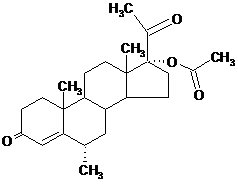
The chemical name for medroxyprogesterone acetate is pregn-4-ene-3, 20-dione, 17-(acetyloxy)-6-methyl-, (6α-).
The structural formula is as follows:
Depo-Provera CI for IM injection is available in vials and prefilled syringes, each containing 1 mL of medroxyprogesterone acetate sterile aqueous suspension 150 mg/mL.
For Depo-Provera CI vials, each mL of sterile aqueous suspension contains: | |
Medroxyprogesterone acetate | 150 mg |
Polyethylene glycol 3350 | 28.9 mg |
Polysorbate 80 | 2.41 mg |
Sodium chloride | 8.68 mg |
Methylparaben | 1.37 mg |
Propylparaben | 0.150 mg |
Water for injection | quantity sufficient |
When necessary, pH is adjusted with sodium hydroxide or hydrochloric acid, or both. | |
For Depo-Provera CI prefilled syringes, each mL of sterile aqueous suspension contains: | |
Medroxyprogesterone acetate | 150 mg |
Polyethylene glycol 3350 | 28.5 mg |
Polysorbate 80 | 2.37 mg |
Sodium chloride | 8.56 mg |
Methylparaben | 1.35 mg |
Propylparaben | 0.147 mg |
Water for injection | quantity sufficient |
When necessary, pH is adjusted with sodium hydroxide or hydrochloric acid, or both. | |
CLINICAL PHARMACOLOGY
Mechanism of Action
Depo-Provera CI (medroxyprogesterone acetate [MPA]) inhibits the secretion of gonadotropins which primarily prevents follicular maturation and ovulation and causes thickening of cervical mucus. These actions contribute to its contraceptive effect.
Pharmacodynamics
No specific pharmacodynamic studies were conducted with Depo-Provera CI.
Pharmacokinetics
Absorption
Following a single 150 mg IM dose of Depo-Provera CI in eight women between the ages of 28 and 36 years old, medroxyprogesterone acetate concentrations, measured by an extracted radioimmunoassay procedure, increase for approximately 3 weeks to reach peak plasma concentrations of 1 to 7 ng/mL.
Distribution
Plasma protein binding of MPA averages 86%. MPA binding occurs primarily to serum albumin. No binding of MPA occurs with sex-hormone-binding globulin (SHBG).
Elimination
Metabolism
MPA is extensively metabolized in the liver by P450 enzymes. Its metabolism primarily involves ring A and/or side-chain reduction, loss of the acetyl group, hydroxylation in the 2-, 6-, and 21-positions or a combination of these positions, resulting in more than 10 metabolites.
Excretion
The concentrations of medroxyprogesterone acetate decrease exponentially until they become undetectable (<100 pg/mL) between 120 to 200 days following injection. Using an unextracted radioimmunoassay procedure for the assay of medroxyprogesterone acetate in serum, the apparent half-life for medroxyprogesterone acetate following IM administration of Depo-Provera CI is approximately 50 days. Most medroxyprogesterone acetate metabolites are excreted in the urine as glucuronide conjugates with only minor amounts excreted as sulfates.
Specific Populations
The effect of hepatic and/or renal impairment on the pharmacokinetics of Depo-Provera CI is unknown.
NONCLINICAL TOXICOLOGY
Carcinogenesis, Mutagenesis, Impairment of Fertility
[see Warnings and Precautions (5.3 , 5.15 ) and Use in Specific Populations (8.3) ] .
CLINICAL STUDIES
Contraception
In five clinical studies using Depo-Provera CI, the 12-month failure rate for the group of women treated with Depo-Provera CI was zero (no pregnancies reported) to 0.7 by Life-Table method. The effectiveness of Depo‑Provera CI is dependent on the patient returning every 3 months (13 weeks) for reinjection.
Bone Mineral Density Changes in Women Treated with Depo-Provera CI
In a controlled, clinical study, adult women using Depo-Provera CI (150mg) for up to 5 years showed spine and hip bone mineral density (BMD) mean decreases of 5–6%, compared to no significant change in BMD in the control group. The decline in BMD was more pronounced during the first two years of use, with smaller declines in subsequent years. Mean changes in lumbar spine BMD of ‑2.86%, ‑4.11%, ‑4.89%, ‑4.93% and ‑5.38% after 1, 2, 3, 4, and 5 years, respectively, were observed. Mean decreases in BMD of the total hip and femoral neck were similar.
After stopping use of Depo-Provera CI, there was partial recovery of BMD toward baseline values during the 2-year post-therapy period. Longer duration of treatment was associated with less complete recovery during this 2-year period following the last injection. Table 4 shows the change in BMD in women after 5 years of treatment with Depo-Provera CI and in women in a control group, as well as the extent of recovery of BMD for the subset of the women for whom 2-year post treatment data were available.
| Time in Study | Spine | Total Hip | Femoral Neck | |||
|---|---|---|---|---|---|---|
| Depo-Provera The treatment group consisted of women who received Depo-Provera CI for 5 years and were then followed for 2 years post‑use (total time in study of 7 years). | Control The control group consisted of women who did not use hormonal contraception and were followed for 7 years. | Depo-Provera | Control | Depo-Provera | Control | |
5 years | -5.38% n=33 | 0.43% n=105 | -5.16% n=21 | 0.19% n=65 | -6.12% n=34 | -0.27% n=106 |
7 years | -3.13% n=12 | 0.53% n=60 | -1.34% n=7 | 0.94% n=39 | -5.38% n=13 | -0.11% n=63 |
Bone Mineral Density Changes in Adolescent Females (12 to 18 Years of Age) Treated with Depo-Provera CI
The impact of Depo-Provera CI (150 mg) use for up to 240 weeks (4.6 years) was evaluated in an open-label non-randomized clinical study in 389 adolescent females (12 to 18 years of age). Use of Depo-Provera CI was associated with a significant decline from baseline in BMD.
Partway through the trial, drug administration was stopped (at 120 weeks). The mean number of injections per Depo-Provera CI user was 9.3. Table 5 summarizes the study findings. The decline in BMD at total hip and femoral neck was greater with longer duration of use. The mean decrease in BMD at 240 weeks was more pronounced at total hip (-6.4%) and femoral neck (-5.4%) compared to lumbar spine (-2.1%).
Adolescents in the untreated cohort had an increase in BMD during the period of growth following menarche. However, the two cohorts were not matched at baseline for age, gynecologic age, race, BMD and other factors that influence the rate of acquisition of BMD.
| Duration of Treatment | Depo-Provera CI (150 mg IM) | Unmatched, Untreated Cohort | ||
|---|---|---|---|---|
| N | Mean % Change | N | Mean % Change | |
Total Hip BMD | ||||
Week 60 (1.2 years) | 113 | -2.75 | 166 | 1.22 |
Week 120 (2.3 years) | 73 | -5.40 | 109 | 2.19 |
Week 240 (4.6 years) | 28 | -6.40 | 84 | 1.71 |
Femoral Neck BMD | ||||
Week 60 | 113 | -2.96 | 166 | 1.75 |
Week 120 | 73 | -5.30 | 108 | 2.83 |
Week 240 | 28 | -5.40 | 84 | 1.94 |
Lumbar Spine BMD | ||||
Week 60 | 114 | -2.47 | 167 | 3.39 |
Week 120 | 73 | -2.74 | 109 | 5.28 |
Week 240 | 27 | -2.11 | 84 | 6.40 |
BMD Recovery Post-Treatment in Adolescents
Longer duration of treatment and smoking were associated with less recovery of BMD following the last injection of Depo-Provera CI. Table 6 shows the extent of recovery of BMD up to 60 months post-treatment for adolescents who received Depo-Provera CI for two years or less compared to more than two years. Post‑treatment follow-up showed that, in women treated for more than two years, only lumbar spine BMD recovered to baseline levels after treatment was discontinued. Adolescents treated with Depo-Provera CI for more than two years did not recover to their baseline BMD level at femoral neck and total hip even up to 60 months post-treatment. Adolescents in the untreated cohort gained BMD throughout the trial period (data not shown) [see Warnings and Precautions (5.1) ] .
| Duration of Treatment | 2 years or less | More than 2 years | ||
|---|---|---|---|---|
| N | Mean % Change from baseline | N | Mean % Change from baseline | |
Total Hip BMD | ||||
End of Treatment | 49 | -1.5% | 49 | -6.2% |
12 M post-treatment | 33 | -1.4% | 24 | -4.6% |
24 M post-treatment | 18 | 0.3% | 17 | -3.6% |
36 M post-treatment | 12 | 2.1% | 11 | -4.6% |
48 M post-treatment | 10 | 1.3% | 9 | -2.5% |
60 M post-treatment | 3 | 0.2% | 2 | -1.0% |
Femoral Neck BMD | ||||
End of Treatment | 49 | -1.6% | 49 | -5.8% |
12 M post-treatment | 33 | -1.4% | 24 | -4.3% |
24 M post-treatment | 18 | 0.5% | 17 | -3.8% |
36 M post-treatment | 12 | 1.2% | 11 | -3.8% |
48 M post-treatment | 10 | 2.0% | 9 | -1.7% |
60 M post-treatment | 3 | 1.0% | 2 | -1.9% |
Lumbar Spine BMD | ||||
End of Treatment | 49 | -0.9% | 49 | -3.5% |
12 M post-treatment | 33 | 0.4% | 23 | -1.1% |
24 M post-treatment | 18 | 2.6% | 17 | 1.9% |
36 M post-treatment | 12 | 2.4% | 11 | 0.6% |
48 M post-treatment | 10 | 6.5% | 9 | 3.5% |
60 M post-treatment | 3 | 6.2% | 2 | 5.7% |
Bone Fracture Incidence in Women Treated with Depo-Provera CI
A retrospective cohort study to assess the association between Depo-Provera CI injection and the incidence of bone fractures was conducted in 312,395 female contraceptive users in the UK. The incidence rates of fracture were compared between Depo-Provera CI users and contraceptive users who had no recorded use of Depo-Provera CI. The Incident Rate Ratio (IRR) for any fracture during the follow-up period (mean=5.5 years) was 1.41 (95% CI 1.35, 1.47). It is not known if this is due to Depo-Provera CI use or to other related lifestyle factors that have a bearing on fracture rate.
In the study, when cumulative exposure to Depo-Provera CI was calculated, the fracture rate in users who received fewer than 8 injections was higher than that in women who received 8 or more injections. However, it is not clear that cumulative exposure, which may include periods of intermittent use separated by periods of non-use, is a useful measure of risk, as compared to exposure measures based on continuous use.
There were very few osteoporotic fractures (fracture sites known to be related to low BMD) in the study overall, and the incidence of osteoporotic fractures was not found to be higher in Depo-Provera CI users compared to non-users.
Importantly, this study could not determine whether use of Depo-Provera CI has an effect on fracture rate later in life.
HOW SUPPLIED/STORAGE AND HANDLING
Depo-Provera CI is supplied in the following strengths and package configurations:
| Package Configuration | Strength | NDC |
|---|---|---|
Depo-Provera CI (medroxyprogesterone acetate sterile aqueous suspension 150 mg/mL) | ||
1 mL vial | 150 mg/mL | NDC 0009-0746-30 |
25 × 1 mL vials | 150 mg/mL | NDC 0009-0746-35 |
Depo-Provera CI prefilled syringes packaged with 22 gauge × 1 1/2 inch Terumo® SurGuard™ Needles | ||
1 mL prefilled syringe | 150 mg/mL | NDC 0009-7376-11 |
Vials MUST be stored upright at controlled room temperature 20° to 25°C (68° to 77°F) [see USP].
Mechanism of Action
Depo-Provera CI (medroxyprogesterone acetate [MPA]) inhibits the secretion of gonadotropins which primarily prevents follicular maturation and ovulation and causes thickening of cervical mucus. These actions contribute to its contraceptive effect.
