Get your patient on Cyclomydril - Cyclopentolate Hydrochloride And Phenylephrine Hydrochloride solution/ Drops (Cyclopentolate Hydrochloride And Phenylephrine Hydrochloride)
Cyclomydril - Cyclopentolate Hydrochloride And Phenylephrine Hydrochloride solution/ Drops prescribing information

INDICATIONS AND USAGE
For the production of mydriasis.
DOSAGE AND ADMINISTRATION
Instill one drop in each eye every five to ten minutes. To minimize systemic absorption, apply pressure over the nasolacrimal sac for two to three minutes following instillation. Observe infants closely for at least 30 minutes.
CONTRAINDICATIONS
Do not use in patients with hypersensitivity to any component of this preparation.
ADVERSE REACTIONS
Ocular
The following ocular adverse experiences have been associated with the use of CYCLOMYDRIL ® (cyclopentolate hydrochloride and phenylephrine hydrochloride ophthalmic solution): increased intraocular pressure, burning/irritation upon instillation, photophobia, blurred vision and superficial punctate keratitis.
Nonocular
Use of cyclopentolate hydrochloride has been associated with psychotic reactions and behavioral disturbances in children. These disturbances include ataxia, incoherent speech, restlessness, hallucinations, hyperactivity, seizures, disorientation as to time and place. This drug produces reactions similar to those of other adrenergic and anticholinergic drugs; however, the central nervous system manifestations as noted above are most common. Other manifestations of adrenergic and anticholinergic topical ophthalmic drugs include tachycardia, hyperpyrexia, hypertension, vasodilation, urinary retention, diminished gastrointestinal motility, convulsion, bradycardia, apnea, necrotizing colitis and abdominal distention (in newborns and especially premature infants), skin rash, drowsiness, and decreased secretion in salivary and sweat glands, pharynx, bronchi and nasal passages. Severe manifestations of toxicity include coma, medullary paralysis and death. Systemic toxicity can result from topical application of sympathomimetic drugs: headache, blood pressure elevation, extrasystoles, tachycardia, syncope and cerebrovascular accidents have been reported.
DESCRIPTION
CYCLOMYDRIL ® (cyclopentolate hydrochloride and phenylephrine hydrochloride ophthalmic solution) is a mydriatic prepared as a sterile topical ophthalmic solution. The active ingredients are represented by the chemical structures:
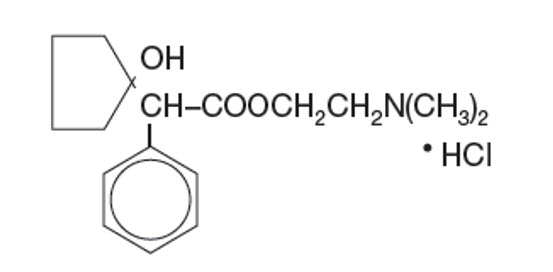
Established Name: Cyclopentolate Hydrochloride
Chemical Name: 2-(Dimethylamino)ethyl 1 - hydroxy-α-phenylcyclopentaneacetate hydrochloride)
Molecular Formula: C 17 H 25 NO 3 • HCl
Molecular Weight: 327.85 g/mol
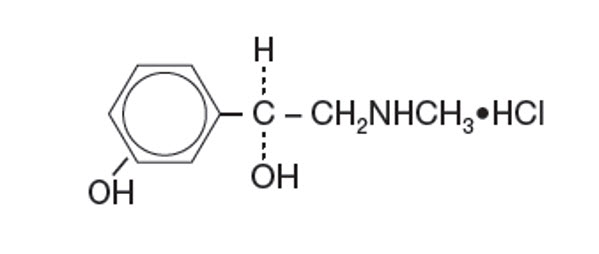
Established Name: Phenylephrine Hydrochloride
Chemical Name: 3-hydroxy-α[(methylamino)-methyl]-, Benzenemethanol, hydrochloride (R)-.
Molecular Formula: C 9 H 13 NO 2 • HCl
Molecular Weight: 203.67 g/mol
Each mL of CYCLOMYDRIL ® (cyclopentolate hydrochloride and phenylephrine hydrochloride ophthalmic solution) contains: Active: cyclopentolate hydrochloride 0.2%, phenylephrine hydrochloride 1%. Preservative: benzalkonium chloride 0.01%. Inactives: edetate disodium, boric acid, hydrochloric acid and /or sodium carbonate (to adjust pH), purified water.
CLINICAL PHARMACOLOGY
Cyclopentolate hydrochloride is an anticholinergic drug and phenylephrine hydrochloride is an adrenergic drug. This combination induces mydriasis that is greater than that of either drug alone at its respective concentration. The concentrations of cyclopentolate hydrochloride and phenylephrine hydrochloride have been selected to induce mydriasis with little accompanying cycloplegia. Heavily pigmented irides may require more doses than lightly pigmented irides.
HOW SUPPLIED
CYCLOMYDRIL ® (cyclopentolate hydrochloride and phenylephrine hydrochloride ophthalmic solution) is supplied as a sterile solution in 2 mL and 5 mL, in plastic DROP-TAINER® dispensers.
2 mL NDC 0065-0359-02
5 mL NDC 0065-0359-05
Storage: Store at 8°C to 25°C (46°F - 77°F)
