Get your patient on Chlorhexidine Gluconate - Chlorhexidine Gluconate rinse (Chlorhexidine Gluconate)
Chlorhexidine Gluconate - Chlorhexidine Gluconate rinse prescribing information

INDICATIONS AND USAGE
Chlorhexidine Gluconate Oral Rinse is indicated for use between dental visits as part of a professional program for the treatment of gingivitis as characterized by redness and swelling of the gingivae, including gingival bleeding upon probing. Chlorhexidine gluconate has not been tested among patients with acute necrotizing ulcerative gingivitis (ANUG). For patients having coexisting gingivitis and periodontitis, see PRECAUTIONS .
DOSAGE AND ADMINISTRATION
Chlorhexidine Gluconate Oral Rinse therapy should be initiated directly following a dental prophylaxis. Patients using chlorhexidine gluconate should be reevaluated and given a thorough prophylaxis at intervals no longer than six months. Recommended use is twice daily oral rinsing for 30 seconds, morning and evening after toothbrushing. Usual dosage is 15 mL (marked in cap) of undiluted chlorhexidine gluconate oral rinse. Patients should be instructed to not rinse with water, or other mouthwashes, brush teeth, or eat immediately after using chlorhexidine gluconate oral rinse. Chlorhexidine Gluconate Oral Rinse is not intended for ingestion and should be expectorated after rinsing.
CONTRAINDICATIONS
This product should not be used by persons who are known to be hypersensitive to chlorhexidine gluconate or other formula ingredients.
ADVERSE REACTIONS
The most common side effects associated with chlorhexidine gluconate oral rinses are (1) an increase in staining of teeth and other oral surfaces, (2) an increase in calculus formation, and (3) an alteration in taste perception; see WARNINGS and PRECAUTIONS . Oral irritation and local allergy-type symptoms have been spontaneously reported as side effects associated with the use of chlorhexidine gluconate rinse. The following oral mucosal side effects were reported during placebo-controlled adult clinical trials: aphthous ulcer, grossly obvious gingivitis, trauma, ulceration, erythema, desquamation, coated tongue, keratinization, geographic tongue, mucocele, and short frenum. Each occurred at a frequency of less than 1.0%. Among postmarketing reports, the most frequently reported oral mucosal symptoms associated with chlorhexidine gluconate are stomatitis, gingivitis, glossitis, ulcer, dry mouth, hypesthesia, glossal edema, and paresthesia. Minor irritation and superficial desquamation of the oral mucosa have been noted in patients using chlorhexidine gluconate oral rinse. There have been cases of parotid gland swelling and inflammation of the salivary glands (sialadenitis) reported in patients using chlorhexidine gluconate oral rinse.
DESCRIPTION
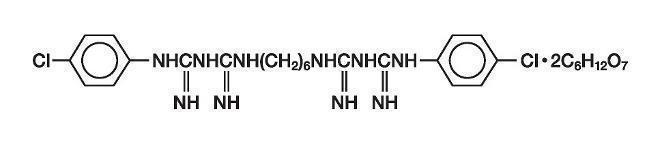
This product is an oral rinse containing 0.12% chlorhexidine gluconate (1,1'-hexamethylene bis [5-(p-chlorophenyl) biguanide]di-D-gluconate) in a base containing water, 11.6% alcohol, glycerin, PEG-40 sorbitan diisostearate, peppermint oil, saccharin sodium, and FD&C Blue #1. The pH may be adjusted with hydrochloric acid or sodium hydroxide. The solution is near-neutral (pH range 5–7). Chlorhexidine gluconate is a salt of chlorhexidine and gluconic acid. Its molecular formula is C 22 H 30 Cl 2 N 10 •2C 6 H 12 O 7 , molecular weight 897.77 and its structural formula is:
CLINICAL PHARMACOLOGY
Chlorhexidine gluconate provides antimicrobial activity during oral rinsing. The clinical significance of chlorhexidine gluconate’s antimicrobial activities is not clear. Microbiological sampling of plaque has shown a general reduction of counts of certain assayed bacteria, both aerobic and anaerobic, ranging from 54–97% through six months’ use. Use of chlorhexidine gluconate oral rinse in a six-month clinical study did not result in any significant changes in bacterial resistance, overgrowth of potentially opportunistic organisms or other adverse changes in the oral microbial ecosystem. Three months after chlorhexidine gluconate use was discontinued, the number of bacteria in plaque had returned to baseline levels and resistance of plaque bacteria to chlorhexidine gluconate was equal to that at baseline.
Pharmacokinetics: Pharmacokinetic studies with 0.12% chlorhexidine gluconate oral rinse indicate approximately 30% of the active ingredient, chlorhexidine gluconate, is retained in the oral cavity following rinsing. This retained drug is slowly released into the oral fluids. Studies conducted on human subjects and animals demonstrate chlorhexidine gluconate is poorly absorbed from the gastrointestinal tract. The mean plasma level of chlorhexidine gluconate reached a peak of 0.206 mcg/g in humans 30 minutes after they ingested a 300-mg dose of the drug. Detectable levels of chlorhexidine gluconate were not present in the plasma of these subjects 12 hours after the compound was administered. Excretion of chlorhexidine gluconate occurred primarily through the feces (~90%). Less than 1% of the chlorhexidine gluconate ingested by these subjects was excreted in the urine.
HOW SUPPLIED
Chlorhexidine Gluconate Oral Rinse USP 0.12% is supplied as a blue liquid in the following sizes: 16 fluid ounce or 1 pint (473 mL) (NDC 0374-5080-02) amber plastic bottles with child-resistant dispensing closures. 1/2 fluid ounce (15 mL) (NDC 0374-5080-01) amber plastic unit-dose cups. Store at 20°-25°C (68°-77°F); excursions permitted to 15°-30°C (59°-86°F) [See USP Controlled Room Termperature]. Dispense in original container or in amber glass bottles. What to expect when using Chlorhexidine Gluconate Oral Rinse
Your dentist has prescribed Chlorhexidine Gluconate Oral Rinse to treat your gingivitis, to help reduce the redness and swelling of your gums, and also to help you control any gum bleeding. Use Chlorhexidine Gluconate Oral Rinse regularly, as directed by your dentist, in addition to daily brushing. Spit out after use. Chlorhexidine Gluconate Oral Rinse should not be swallowed.
If you develop allergic symptoms such as skin rash, itch, generalized swelling, breathing difficulties, light headedness, rapid heart rate, upset stomach or diarrhea, seek medical attention immediately. Chlorhexidine Gluconate Oral Rinse should not be used by persons who have a sensitivity to it or its components.
Chlorhexidine Gluconate Oral Rinse may cause some tooth discoloration, or increases in tartar (calculus) formation, particularly in areas where stain and tartar usually form. It is important to see your dentist for removal of any stain or tartar at least every six months, or more frequently if your dentist advises.
- Both stain and tartar can be removed by your dentist or hygienist. Chlorhexidine Gluconate Oral Rinse may cause permanent discoloration of some front-tooth fillings.
- To minimize discoloration, you should brush and floss daily, emphasizing areas which begin to discolor.
- Chlorhexidine Gluconate Oral Rinse may taste bitter to some patients and can affect how foods and beverages taste. This will become less noticeable in most cases with continued use of Chlorhexidine Gluconate Oral Rinse.
- To avoid taste interference, rinse with Chlorhexidine Gluconate Oral Rinse after meals. Do not rinse with water or other mouthwashes immediately after rinsing with Chlorhexidine Gluconate Oral Rinse.
If you have any questions or comments about Chlorhexidine Gluconate Oral Rinse, contact your dentist or Pharmacist.
Call your health care provider for medical advice about side effects. You may report side effects to FDA at 1-800-FDA-1088.
Keep this and all drugs out of the reach of children.
Manufactured by:
Lyne Laboratories, Inc.
Brockton, MA 02301
R2-07/15
