Get your patient on Ammonium Lactate - Ammonium Lactate cream (Ammonium Lactate)
Ammonium Lactate - Ammonium Lactate cream prescribing information

INDICATIONS AND USAGE
Ammonium Lactate Cream, 12% is indicated for the treatment of ichthyosis vulgaris and xerosis.
DOSAGE AND ADMINISTRATION
Apply to the affected areas and rub in thoroughly. Use twice daily or as directed by a physician.
CONTRAINDICATIONS
Ammonium Lactate Cream, 12% is contraindicated in those patients with a history of hypersensitivity to any of the label ingredients.
ADVERSE REACTIONS
In controlled clinical trials of patients with ichthyosis vulgaris, the most frequent adverse reactions in patients treated with Ammonium Lactate Cream, 12% were rash (including erythema and irritation) and burning/stinging. Each was reported in approximately 10 to 15% of patients. In addition, itching was reported in approximately 5% of patients.
In controlled clinical trials of patients with xerosis, the most frequent adverse reactions in patients treated with Ammonium Lactate Cream, 12% were transient burning, in about 3% of patients, stinging, dry skin and rash, each reported in approximately 2% of patients.
DESCRIPTION
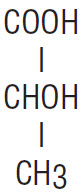
• Ammonium Lactate Cream, 12% specially formulates 12% lactic acid, as ammonium lactate to provide a cream pH of 4.5 to 5.5. Ammonium Lactate Cream, 12% also contains cetyl alcohol, glycerin, glyceryl monostearate, laureth-4, light mineral oil, magnesium aluminum silicate, methylcellulose, methylparaben, propylparaben, polyoxyethylene-100 stearate, polyoxyl 40 stearate, propylene glycol, purified water and for pH adjustment: lactic acid. Lactic acid is a racemic mixture of 2-hydroxypropanoic acid and has the following structural formula:
CLINICAL PHARMACOLOGY
Lactic acid is an alpha-hydroxy acid. It is a normal constituent of tissues and blood. The alpha-hydroxy acids (and their salts) are felt to act as humectants when applied to the skin. This property may influence hydration of the stratum corneum. In addition, lactic acid, when applied to the skin, may act to decrease corneocyte cohesion. The mechanism(s) by which this is accomplished is not yet known.
An in vitro study of percutaneous absorption of ammonium lactate cream using human cadaver skin indicates that approximately 6.1% of the material was absorbed after 68 hours.
HOW SUPPLIED
Ammonium Lactate Cream, 12% is available as follows: 1-140 gram laminate tube NDC 51672-1301-2 2-140 gram laminate tubes NDC 51672-1301-4 385 gram plastic bottle NDC 51672-1301-0
Store at 20° to 25°C (68° to 77°F) [see USP Controlled Room Temperature].